Daijiworld Media Network - Bhubaneswar
Bhubaneswar, Apr 22: The Odisha cabinet has approved a set of eight significant proposals spanning multiple sectors, with a strong focus on clean energy expansion, digital governance, and infrastructure development.
One of the major decisions includes the introduction of the Odisha City Gas Distribution (CGD) Policy, designed to accelerate the rollout of Piped Natural Gas (PNG) and Compressed Natural Gas (CNG) networks across urban areas. The move aligns with broader national efforts to promote environmentally sustainable energy alternatives.
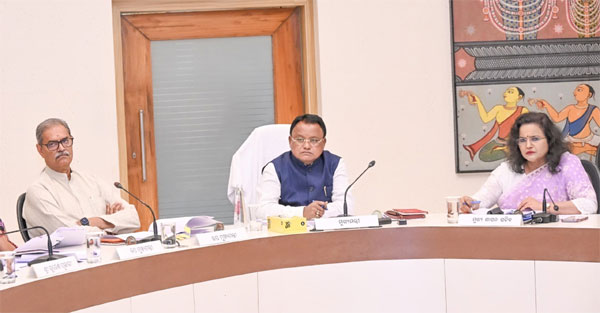
The proposals were cleared during a Cabinet meeting chaired by chief minister Mohan Charan Majhi at Lok Seva Bhawan. Addressing the media, Chief Secretary Anu Garg highlighted the increasing emphasis on PNG as a cleaner substitute for LPG, particularly in the context of global energy dynamics. She noted that the policy aims to expand access to PNG for households and institutions while supporting the vision of a self-reliant India.
The CGD Policy is expected to simplify procedures and remove existing hurdles such as multiple approval layers and the lack of a unified regulatory mechanism. The Housing and Urban Development Department will serve as the nodal agency, supported by state- and district-level monitoring bodies to ensure effective implementation.
Officials stated that the initiative would not place any financial burden on the state treasury. Instead, it is expected to draw private investment, create employment opportunities, and improve the ease of doing business. A temporary waiver on approval fees until March 2027 has also been proposed to encourage faster adoption.
In another key decision, the Cabinet approved the Odisha State Data Policy 2.0, aimed at establishing a structured and secure data governance system. The policy will cover the entire data lifecycle—from collection and storage to processing and utilisation—across government departments and affiliated organisations.
To oversee its execution, a multi-layered governance framework has been put in place. This includes state-level committees for strategic direction and oversight, alongside a dedicated State Data Authority to handle governance, data protection, and interoperability. The Odisha Computer Application Centre (OCAC) will act as the nodal body for coordination and technical support, while individual departments will ensure implementation at their level.
On the infrastructure front, the Cabinet approved the construction of a new high-level bridge over the Kathajodi River, to be built upstream of the existing Subash Chandra Bose Setu. The project aims to strengthen connectivity between Cuttack and Bhubaneswar while easing traffic congestion on National Highway-16.
The contract, valued at Rs 158.88 crore (excluding GST), has been awarded to M/s SPS Construction India Pvt Ltd. The bridge is expected to be completed within 36 months and will improve travel between key points such as Bhubaneswar Airport and Nandankanan Zoological Park.
Additionally, the Cabinet cleared a proposal by Shree Ambica Cotspin Pvt. Ltd. to set up a modern yarn manufacturing unit in Bolangir district. The initiative is part of Odisha’s broader push to boost industrial growth in underdeveloped regions, including the KBK area and other Aspirational Districts.