Daijiworld Media Network – Mumbai
Mumbai, May 29: The Reserve Bank of India (RBI) has revived plans to introduce polymer-based banknotes in circulation as part of efforts to address the growing demand for currency notes and improve durability of cash in circulation.
According to sources familiar with the development, the proposal to introduce polymer or plastic banknotes was discussed during the RBI board’s recent meetings held in Patna and Mumbai.
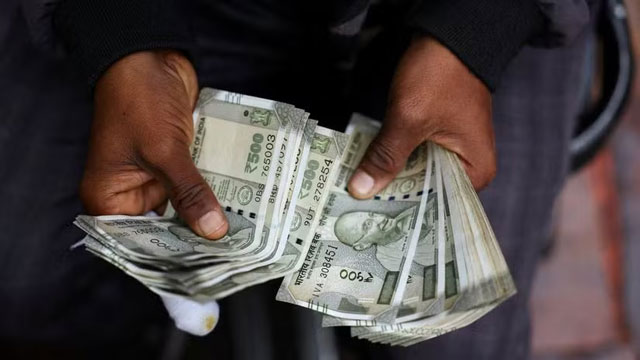
Officials said the move is being considered due to the lower long-term production cost and significantly higher shelf life of polymer notes compared to conventional paper currency. A pilot project involving public circulation of polymer banknotes is expected to be announced soon.
“There are clear advantages in the cost of production of such notes compared to the paper notes currently being used. Moreover, automated teller machines (ATMs) would be enabled to dispense polymer-based notes. We have the wherewithal to do this now,” a source aware of the discussions stated.
The RBI’s annual report for FY25 revealed that expenditure on printing paper currency rose sharply to Rs 6,372.8 crore during 2024-25 compared to Rs 5,101.4 crore in the previous financial year, mainly due to increased demand for banknotes.
Another major reason behind the proposed shift is the rising disposal of soiled currency notes. Data showed that 23.8 billion pieces of damaged and worn-out banknotes were withdrawn during FY25, marking a 12.3 per cent increase from the previous year’s 21.24 billion pieces.
Most of the soiled notes belonged to the Rs 500 denomination, followed by Rs 100 notes.
Currency in circulation has also continued to witness strong growth despite the rise of digital payments. As of May 15, currency in circulation stood at a record Rs 42.86 trillion, registering an annual growth of 11.5 per cent.
During the first one-and-a-half months of FY27 alone, currency circulation reportedly increased by Rs 1.15 trillion, indicating sustained cash demand across the country.
Sources noted that demand for lower denomination notes such as Rs 10 and Rs 20 has remained consistently high in recent years, though their share in the overall value of banknotes in circulation remains relatively low.
In value terms, Rs 10 notes accounted for only 0.7 per cent of total circulation during the last two years, while Rs 20 notes accounted for 0.8 per cent.
The RBI has also been attempting to increase the use of coins, though with limited success. The supply of coins increased from around 1.2 billion pieces in FY24 to 1.5 billion pieces in FY25. Of these, Rs 5 denomination coins constituted nearly 800 million pieces, followed by around 400 million Rs 20 coins.
India had earlier attempted to introduce polymer banknotes in 2012 when the then UPA government approved a field trial involving one billion Rs 10 polymer notes across five cities.
At the time, the primary objective was to improve the durability and shelf life of currency notes rather than combat counterfeiting. However, the project was eventually shelved due to technological challenges.
Sources now indicate that those challenges have largely been resolved over the past decade, including solutions enabling ATMs to identify and process polymer notes efficiently.
Globally, around 60 countries have already introduced polymer banknotes. Australia became the first country to launch plastic currency in 1988 with a ten-dollar note, followed by nations such as Singapore, Indonesia, Thailand, Malaysia, Romania and Canada.
Unlike polymer notes, US dollar currency continues to be printed using a specialised cotton-linen blend material.