Daijiworld Media Network - Guwahati
Guwahati, May 30: The debate over the Uniform Civil Code (UCC) in the Assam Assembly has highlighted sharp political and communal divisions within the newly elected House, with the ruling NDA and Opposition Congress trading accusations over representation and minority politics.
The 126-member Assembly is dominated by the NDA, which holds 102 seats, including 82 won by the Bharatiya Janata Party and 10 each by its allies, the Asom Gana Parishad and the Bodoland People's Front.
The Opposition occupies just 24 seats, comprising 19 held by the Indian National Congress, two by the Raijor Dal, two by the All India United Democratic Front and one by the All India Trinamool Congress. Of these, only two Opposition legislators are Hindus, while the rest are Muslim representatives from minority-dominated constituencies.
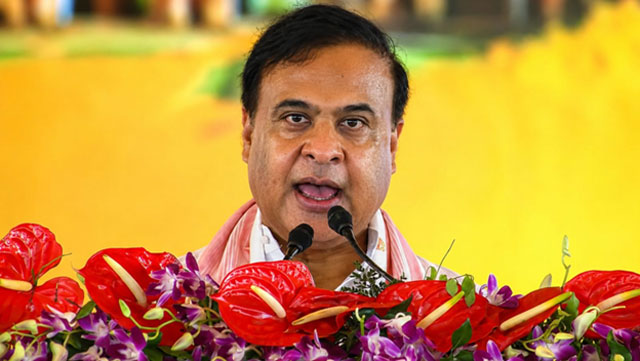
Fulfilling an earlier commitment, Assam Chief Minister Himanta Biswa Sarma introduced the UCC Bill during the first session of the new Assembly. The BJP projected Opposition resistance to the legislation as evidence of what it described as the Congress's focus on a specific community.
Speaking at the end of a five-hour debate involving more than 30 legislators, Sarma said the Opposition no longer represented the state's diverse social and religious groups.
“The composition of the Assembly itself proves that the Congress does not represent Assam in the totality of its communities and religions today. It only represents a particular religious community,” he said.
The Chief Minister also criticised the Opposition for focusing on issues related to Islamic personal law during the debate while ignoring religious texts and traditions followed by other communities.
Opposition members argued that existing laws already address many of the issues cited as justification for the UCC. Congress Legislature Party leader Wazed Ali Choudhury pointed to laws against child marriage, triple talaq and polygamy, questioning the need for a separate UCC framework.
The Opposition also demanded wider public consultations involving leaders from different religious and social groups before implementing the legislation. Several members expressed concern that provisions relating to live-in relationships and personal laws could infringe upon constitutional protections relating to religious freedom.
Choudhury argued that imposing a uniform legal framework in a multicultural and multi-religious society would go against the spirit of the Constitution and disregard personal laws that have evolved over generations.
TMC legislator Sherman Ali Ahmed opposed certain provisions of the Bill, alleging that they conflicted with Islamic teachings and constitutional guarantees protecting religious practices.
The Congress has also sought to balance representation within its legislative leadership. While Choudhury was appointed Legislature Party leader, the party selected its only Hindu MLA, Joy Prakash Das, as deputy leader.
With several senior Congress leaders, including Assam Congress president Gaurav Gogoi and former Leader of Opposition Debabrata Saikia, losing in the Assembly elections, Choudhury has emerged as the party's senior-most legislator in the House.
Responding to Sarma's remarks, Das accused the Chief Minister of attempting to deepen divisions within the state. He argued that election victories do not necessarily reflect unanimous support from all sections of society and said the BJP was trying to build a narrative based on the Assembly's composition.
Political observers note that the overwhelming NDA majority has altered the dynamics of legislative debates, with the UCC discussion emerging as one of the first major flashpoints in the new Assembly.