Daijiworld Media Network - Beirut
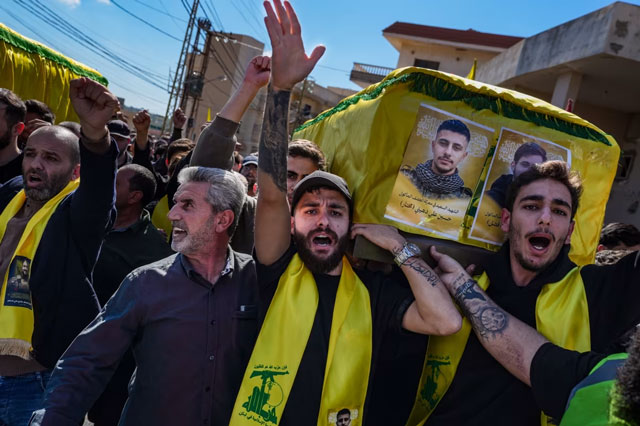
Beirut, Jun 7: Once widely viewed as significantly weakened by Israeli military operations and regional setbacks, Hezbollah is witnessing a revival of its influence following the escalation of conflict involving Iran, Israel and the United States.
The Iran-backed Lebanese group had faced a series of major blows over the past two years, including the killing of its longtime leader Hassan Nasrallah in 2024, the fall of Syrian President Bashar al-Assad, and increasing domestic pressure in Lebanon to disarm.
However, analysts say the recent US-Israeli military campaign against Iran has strengthened Hezbollah's position by reviving its role as a resistance movement.
Nicholas Blanford, a Beirut-based analyst with the Atlantic Council, said the conflict has reinforced Hezbollah's traditional narrative of resisting Israeli military action.
Despite suffering casualties and sustained Israeli attacks, Hezbollah's morale remains strong and its fighters appear prepared for a prolonged conflict, according to analysts and members of the group.
Recent ceasefire agreements between Israel and Lebanon have failed to halt hostilities. Under the latest US-brokered arrangement, Hezbollah was expected to cease attacks, withdraw from southern Lebanon and eventually disarm. However, both sides have accused each other of violating previous agreements.
Tensions escalated after the US and Israel launched military operations against Iran in March, prompting Hezbollah to resume rocket attacks on northern Israel after months of relative restraint.
Hezbollah lawmaker Ibrahim Al Moussawi said the group viewed the renewed conflict as a necessary moment to respond, arguing that continued Israeli military actions left it with little alternative.
Israel subsequently intensified its operations in southern Lebanon, leading to large-scale displacement and significant casualties, according to Lebanese authorities.
The renewed confrontation has allowed Hezbollah to reposition itself as a defender of Lebanese territory and communities affected by the conflict.
Although Israeli military operations have reduced Hezbollah's rocket-launching capabilities, the group has adapted its tactics, increasingly relying on drones and other methods to target Israeli forces.
Hezbollah claims its actions are aimed at resisting what it describes as ongoing Israeli occupation of parts of southern Lebanon. Fighters within the organisation insist that military resistance remains necessary as long as Israeli forces continue operations in Lebanese territory.
Founded during Israel's 1982 invasion of Lebanon and backed by Iran, Hezbollah has evolved into a major political and military force. In addition to its armed wing, the group holds seats in Lebanon's parliament and plays a significant role in the country's political landscape.
However, Hezbollah's actions remain deeply controversial within Lebanon. Prime Minister Nawaf Salam has criticised military operations conducted outside state authority and warned against allowing the country to be drawn into another prolonged conflict.
Lebanese President Joseph Aoun recently said ordinary Lebanese citizens were paying the price for regional rivalries and repeated wars.
Public opinion in Lebanon remains divided. While Hezbollah continues to enjoy strong support among many members of the country's Shia community, criticism has grown among other sections of society, including some Shia citizens who fear repeated conflicts are causing immense damage to Lebanon.
Many residents displaced by the fighting have expressed frustration over the continuing cycle of conflict, reconstruction and renewed destruction, even as they acknowledge the broader regional tensions driving the violence.
With diplomatic efforts struggling to gain momentum and military exchanges continuing across the region, Hezbollah remains a central player in a conflict that is reshaping the political and security landscape of the Middle East.