Daijiworld Media Network - Washington
Washington, Jun 8: US President Donald Trump has asserted that Iran's military capabilities have been significantly weakened following months of American military operations, while expressing confidence that Washington is nearing either a diplomatic breakthrough or a decisive resolution to the conflict.
In an interview with NBC's Meet the Press, Trump argued that Iran's missile arsenal has been substantially reduced and no longer poses the same level of threat it once did. According to the President, only a limited portion of the country's missile stockpile remains operational compared to its capabilities before the military campaign began.
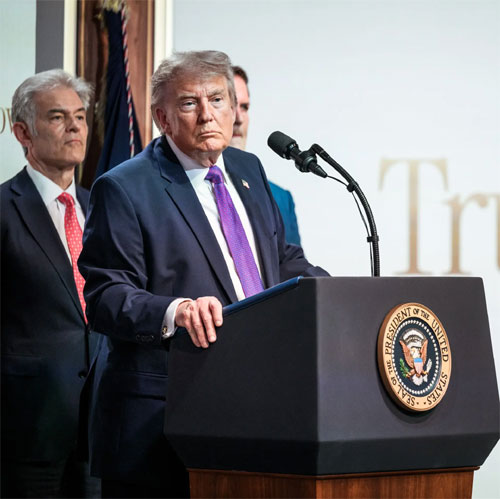
Addressing concerns that the United States could become entangled in another prolonged conflict in the Middle East, Trump rejected comparisons with previous military engagements in the region. He insisted that the current operation was fundamentally different and would not evolve into an open-ended war.
The remarks came as the conflict crossed the 100-day mark, prompting renewed debate over Washington's long-term objectives and the likelihood of a negotiated settlement with Tehran.
Trump claimed that US forces had achieved substantial military success, saying key components of Iran's defence infrastructure—including drone production facilities, missile launch sites and manufacturing capabilities—had been severely damaged or destroyed.
He further maintained that rebuilding those capabilities would take years and suggested that the United States would not allow Iran sufficient time to restore its military strength.
Throughout the interview, Trump reiterated that preventing Iran from acquiring a nuclear weapon remains the administration's primary objective. He described the issue as a non-negotiable security priority and emphasized that the United States would take whatever steps it deemed necessary to prevent Tehran from developing nuclear arms.
When questioned about the conditions that could trigger additional military action, Trump said his threshold would be reached if diplomatic negotiations appeared unlikely to succeed or failed to progress quickly enough.
The President expressed optimism about ongoing talks, indicating that discussions were approaching a critical stage. While voicing hope for a diplomatic agreement, he also warned that military options remained available should negotiations collapse.
Trump dismissed criticism that the conflict contradicts his long-standing opposition to extended foreign military interventions. He argued that the operation was driven by national security concerns rather than a desire for prolonged military involvement abroad.
Confident that the situation would not become a long-term entanglement, Trump stated that the United States was nearing the end of its current objectives and anticipated either a comprehensive agreement with Iran or a conclusive outcome through other means.
His comments underscore the administration's dual-track strategy of maintaining military pressure while pursuing a diplomatic settlement, as tensions between Washington and Tehran continue to shape the geopolitical landscape of the Middle East.