Daijiworld Media Network - New Delhi
New Delhi, Jun 9: Senior Congress leader Adhir Ranjan Chowdhury on Tuesday took a swipe at the ongoing turmoil within the Trinamool Congress (TMC), describing recent statements by party leaders as manifestations of political frustration following electoral setbacks.
Reacting to remarks made by Trinamool MP Kalyan Banerjee, Chowdhury dismissed calls and rhetoric surrounding fresh political contests, saying such demands were unrealistic and detached from democratic processes.
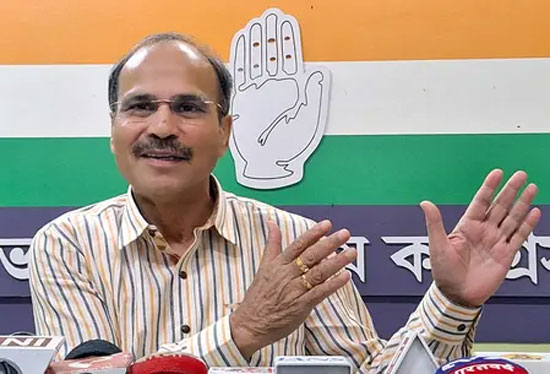
“Such statements make little sense. Elections in a democracy cannot be conducted repeatedly at will. This is not a village wrestling match where another bout can be arranged immediately after a defeat. These comments reflect frustration rather than political reality,” Chowdhury said while speaking to IANS.
The controversy erupted after a meeting between a group of Trinamool MPs and Union Minister Bhupendra Yadav on Monday, triggering fresh tensions within the ruling West Bengal party. Responding to the development, Kalyan Banerjee accused some party colleagues of moving closer to the BJP, claiming they had begun treating Prime Minister Narendra Modi as their political leader.
Chowdhury also weighed in on the growing dissent within the Trinamool Congress, where senior MP Kakoli Ghosh Dastidar has emerged as a prominent face of a dissident faction challenging the party leadership.
Commenting on the developments, the Congress veteran suggested that the rebel MPs were attempting to redefine their political roles after years within the party. He remarked that public service was not a crime and hinted that some leaders were only now expressing concerns about broader national issues after experiencing political setbacks.
The remarks come amid reports of a widening rift within the Trinamool Congress parliamentary ranks, raising questions about unity within the party ahead of future political battles.
At the centre of the rebellion is Kakoli Ghosh Dastidar, a four-time Lok Sabha MP from Barasat and a medical professional by training. She is reportedly leading a group of Trinamool parliamentarians seeking recognition as a separate bloc in Parliament, a move that has intensified tensions with party chief and West Bengal Chief Minister Mamata Banerjee.
The internal revolt, considered one of the most significant challenges faced by the Trinamool Congress in Parliament in recent years, follows a series of disagreements over party functioning and leadership decisions. The episode has fuelled speculation about deeper organisational cracks within the party and could have wider political implications in West Bengal’s evolving political landscape.