Daijiworld Media Network – Washington
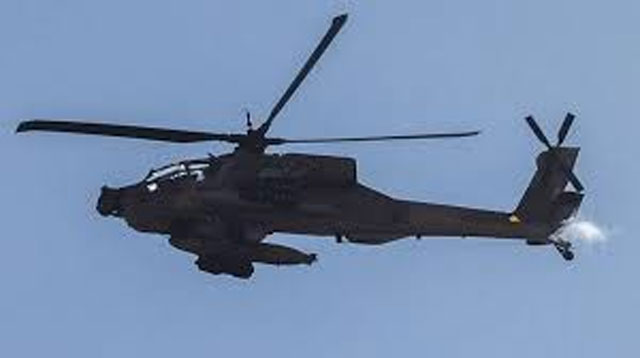
Washington, Jun 10: The United States launched military strikes on Iranian targets after President Donald Trump accused Tehran of downing an American Apache helicopter over the Strait of Hormuz, significantly escalating tensions between the two countries.
According to the US military, the operation was carried out as a "proportional response" to what it described as Iranian aggression. A US official told Reuters that the Apache helicopter was brought down by an Iranian one-way attack drone. Trump said both pilots aboard the helicopter survived unharmed but warned that the US would respond.
US officials said American forces targeted several Iranian air defence and radar installations near the Strait of Hormuz. The US Central Command (CENTCOM) described the strikes as self-defence measures following the helicopter incident.
CENTCOM said its forces struck Iranian air defence systems, ground control stations and surveillance radar sites in the region, adding that the operation had been completed.
Explosions were reported across parts of southern Iran early Wednesday. Iran's Fars news agency reported blasts in eastern areas of Hormozgan province, while Mehr news agency said explosions were heard in the port city of Bandar Abbas.
Iranian state media also reported a projectile impact in Sirik and said Qeshm Island had come under attack, indicating that the US operation extended across several locations near the strategically important waterway.
Iranian Foreign Minister Abbas Araqchi did not directly comment on the helicopter incident but warned that foreign military forces operating near Iran faced risks from accidents, miscalculations and regional tensions.
"To reduce risk, the best solution is for them to leave," Araqchi said in a social media post.
Following the strikes, Araqchi warned Washington against additional military action, stating that Iran's armed forces would leave "no attack or threat unanswered." He urged foreign forces to leave the region if they wished to remain safe.
Referring to the history of the Persian Gulf, he said it contained many examples of the consequences faced by "intruding outsiders," in an apparent warning to the United States.
Iran's Revolutionary Guards (IRGC) claimed they had targeted the US Fifth Fleet in Bahrain with drones in retaliation for the American strikes, according to Iranian state media.
The Guards said clashes were continuing and warned of a stronger response if what they termed US aggression persisted. They also claimed that the US strikes damaged a telecommunications tower and two water tanks in the Iranian port town of Sirik.
Before the US operation, Iranian state media quoted a military source as saying that Iran had conducted no offensive air operations in the Strait of Hormuz during the previous 24 hours. The source also warned that Tehran would respond decisively to any renewed hostility linked to the helicopter incident.
The latest exchange marks one of the most serious direct confrontations between the United States and Iran in recent years, raising concerns about regional stability and the security of global energy supplies.