Daijiworld Media Network - Panaji
Panaji, Jun 22: The Goa State Pollution Control Board (GSPCB) has ordered a detailed inquiry into its Real-Time Online Noise Monitoring System (RTONMS) after finding that the existing devices cannot identify the exact source of noise pollution.
The decision has raised concerns over enforcement actions taken against establishments based on noise data generated by these monitoring systems.
The issue was discussed during a recent GSPCB Board meeting, where officials noted that the online noise monitoring stations installed at various establishments only record ambient noise levels and do not have the capability to differentiate whether the sound comes from music, traffic, construction work, sea waves or nearby establishments.
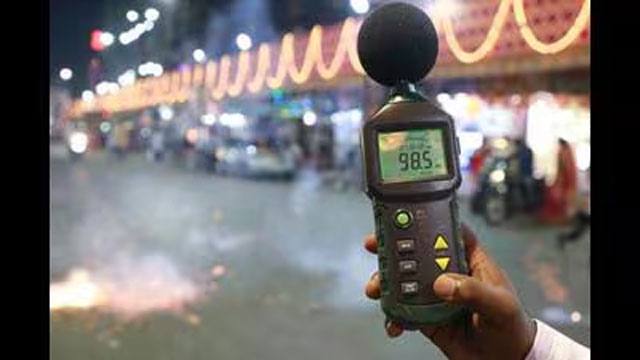
The Board minutes stated that the systems “cannot identify the source of the sound” and that physical verification by officials is the only way to confirm the origin of noise.
Following this, the Board directed its Law Officer to conduct an inquiry into why the monitoring systems were purchased without verifying whether the devices had sound source classification capabilities.
The inquiry will also examine why noise level violations recorded by the systems were attributed to individual establishments and how environmental compensation was calculated and imposed based on such readings.
The Board observed that it had been relying on data from these meters and linking violations to establishments where the devices were installed, despite the inability of the systems to conclusively establish the source of excessive noise.
It also questioned why the limitations of the technology were not brought to the Board’s attention when 38 online noise monitoring stations were installed at different establishments under the supervision and approval of officials.
Pending the inquiry, the Noise Monitoring Cell under the Scientific Section has been instructed to form teams for physical inspection of noise levels at establishments. Any violations found during field checks will be reported for further action.
The Board stated that the existing monitoring data “cannot conclusively prove” that excessive noise is caused by the operations of the establishments where the meters are installed and could also originate from other sources such as commercial units, traffic and construction activities.
The Board further noted that many establishments operate in clusters, while not all have installed noise monitoring devices. As a result, establishments with meters often dispute responsibility for recorded noise violations, claiming the source could be from surrounding activities.