Daijiworld Media Network – New Delhi
New Delhi, Jul 23: Abdominal pain is one of the most common health complaints, but identifying its exact cause can often be difficult. While acidity and kidney stones may both cause abdominal discomfort, doctors say the two conditions differ in the nature, location and associated symptoms of the pain.
According to Dr Bhanu Mishra, Consultant Nephrologist at Fortis Hospital, Shalimar Bagh, acidity is caused by excessive stomach acid or acid reflux, which irritates the lining of the stomach and food pipe. The pain is usually experienced as a burning sensation in the upper abdomen or chest and commonly occurs after consuming spicy, oily or heavy meals. It may also be accompanied by heartburn, bloating, sour belching, nausea and a bitter taste in the mouth.
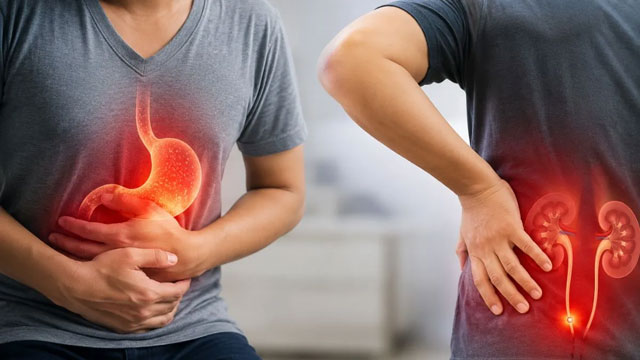
Kidney stones, on the other hand, develop when mineral deposits block the urinary tract. Dr Mishra said the pain associated with kidney stones usually begins suddenly and is sharp in nature. It is commonly felt in the back or side below the ribs and may spread to the lower abdomen or groin as the stone moves. The pain often occurs in waves and may be accompanied by pain while urinating, blood in the urine, frequent urination, nausea and vomiting.
Dr Mishra said one of the most important differences between the two conditions is the location of the pain. Acidity-related pain generally remains in the upper part of the digestive tract and is often linked to meals, whereas kidney stone pain typically starts in the flank or lower back before radiating towards the groin.
He advised people not to ignore severe or persistent abdominal pain, particularly if it is accompanied by blood in the urine, fever or difficulty in passing urine. Doctors may recommend urine and blood tests, an ultrasound or a CT scan to identify the exact cause.
Dr Mishra cautioned against self-diagnosis, noting that although acidity and kidney stones may produce similar symptoms, they require entirely different treatments. He advised maintaining adequate hydration, following a healthy lifestyle and limiting the intake of spicy and fatty foods to help reduce the risk of both conditions.