Daijiworld Media Network - Bath
Bath, Jul 28: Researchers have developed a sustainable, plant-based wound dressing that rapidly delivers antibiotics to prevent infections and significantly reduces the formation of bacterial biofilms, offering a promising new approach to wound care.
The innovation, developed by researchers from the Department of Chemical Engineering and the Department of Chemistry, is designed to tackle wound infections during the critical early stages, before bacteria form protective biofilms that make infections more difficult to treat.
Wound infections pose a major challenge to healthcare systems worldwide, with bacteria capable of forming biofilms within hours of entering a wound, slowing healing and reducing the effectiveness of antibiotics.
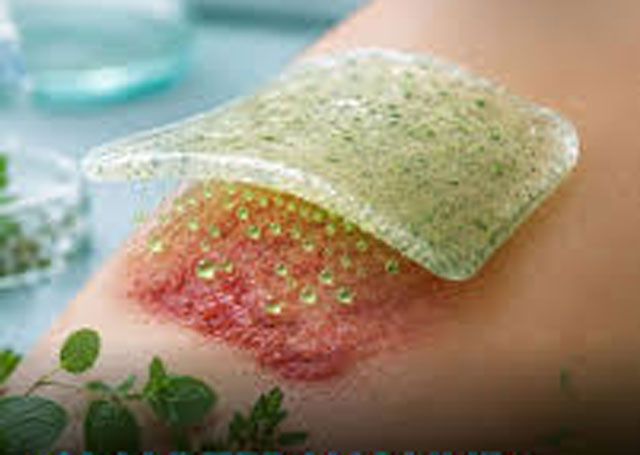
The newly developed dressing is made from two layers of plant-based polymers, eliminating the need for petroleum-derived plastics or additional chemical treatments. One layer, placed directly against the wound, contains the commonly used antibiotic tetracycline and rapidly releases the drug. The outer layer is water-repellent, helping to regulate moisture loss while protecting the wound.
Laboratory tests showed the dressing achieved effective antibiotic concentrations within four hours and reduced biofilm formation by more than 90 per cent.
Lead author Dr Xiang Ding said the two plant-based materials used in the dressing differed chemically by only two carbon atoms. However, by spinning them into microscopic fibres, researchers were able to create two distinct functional layers without further chemical modification.
He said the design enables the dressing to direct antibiotics efficiently towards the wound while reducing unnecessary drug loss and simultaneously providing a protective barrier.
The multidisciplinary research team, working with collaborators from the University of Bristol and Newcastle University, tested the dressing against two common wound-infecting bacteria — Staphylococcus aureus and Pseudomonas aeruginosa.
Laboratory studies using model wounds demonstrated a significant reduction in bacterial growth and biofilm formation. The dressing was also found to be compatible with human skin cells, with no evidence of toxicity during laboratory testing.
Researchers said the study demonstrates how plant-based materials originally developed for sustainable plastics and packaging could be adapted for advanced healthcare applications.
Although additional research and clinical testing are required before the dressing can be used in medical practice, the findings highlight the potential for environmentally sustainable wound care technologies that maintain high clinical performance.
The project also received technical support from the University's Central Research Facility, whose researchers contributed to the laboratory analysis and imaging work underpinning the study.