Daijiworld Media Network – Mumbai
Mumbai, Aug 6: Artificial intelligence (AI) is emerging as a valuable tool in lung cancer screening by helping doctors identify suspicious changes at an earlier stage, experts said.
Lung cancer often remains silent for a long period, making early detection difficult. According to global cancer data, it remains one of the leading causes of cancer-related illness and deaths worldwide. While the five-year survival rate is around 5 to 6 per cent, early detection can improve survival chances significantly to nearly 35 to 36 per cent.
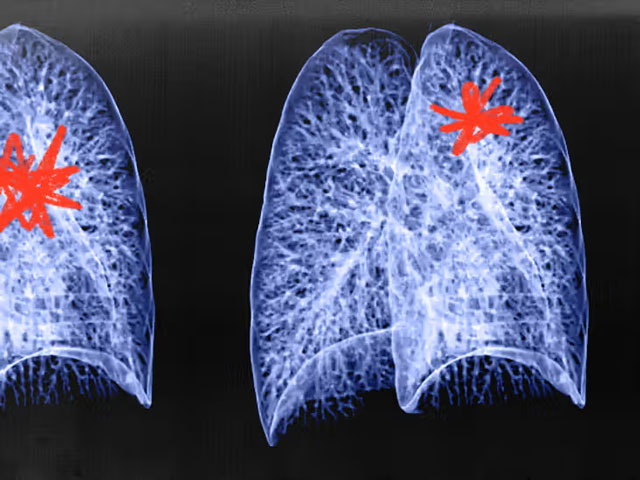
Dr Manoj Deshmukh, Head of Department and Consultant Radiologist at Lilavati Hospital and Research Center, Mumbai, said AI is increasingly being used alongside advanced screening methods to overcome challenges in medical imaging and human interpretation.
He stressed that AI is not intended to replace radiologists but to support them in making faster and more accurate assessments.
Lung cancer can be difficult to diagnose in its early stages as many patients do not experience symptoms. By the time signs such as persistent cough, blood in sputum or unexplained weight loss appear, the disease may have already spread.
Dr Deshmukh said advanced screening methods, particularly low-dose CT (LDCT), play an important role in identifying lung cancer earlier. However, while LDCT can detect abnormalities with high sensitivity, it may also result in false-positive findings, leading to additional scans, medical visits and sometimes unnecessary biopsies.
He explained that AI can help address these challenges by analysing CT scans using deep-learning algorithms trained on large datasets of previously diagnosed cases.
Artificial intelligence systems can examine lung nodules by studying their size, shape, density, margins and changes over time. This process helps assess whether a nodule is likely to be cancerous and supports doctors in deciding further treatment steps.
According to Dr Deshmukh, AI-based image analysis has helped shift lung cancer detection towards earlier stages, from advanced stages III and IV to stages I and II.
AI tools can assist in lung segmentation, nodule detection, reducing false positives, analysing tumour characteristics and predicting disease outcomes.
However, he noted that final diagnosis still requires the expertise of a radiologist. While AI can identify patterns and highlight areas of concern, doctors evaluate the findings in the context of a patient's medical history and overall condition.
"The collaboration between AI and radiologists can make lung cancer screening faster, more accurate and more effective, ultimately improving the chances of early intervention and successful treatment," Dr Deshmukh said.
Experts believe that the combination of artificial intelligence and medical expertise could transform lung cancer screening by enabling earlier detection, reducing unnecessary procedures and improving patient outcomes.