Daijiworld Media Network - New York
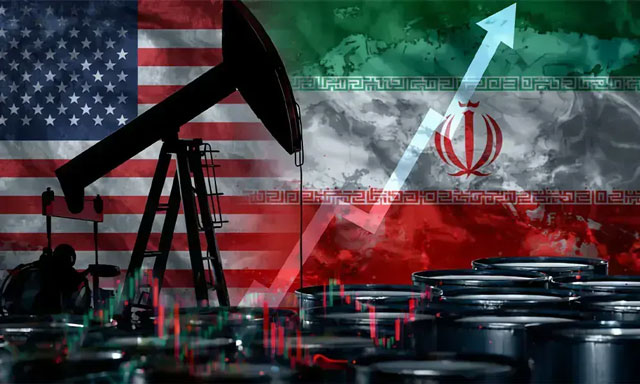
New York, Aug 11: Oil prices rose on Tuesday as negotiations between the United States and Iran over a peace deal and the reopening of the Strait of Hormuz reached an impasse, while Asian shares moved cautiously amid uncertainty over the global inflation outlook.
US President Donald Trump on Monday responded to Iran’s conditions for a peace agreement with demands that Tehran pay compensation for people killed in wars, attacks and protests. The move marked a further escalation in rhetoric and is likely to complicate efforts to reopen the crucial waterway.
Brent crude futures rose to USD 88 per barrel, while US crude futures climbed to USD 82.45, with both reaching their highest levels since July 31. The contracts had gained around 5% on Monday.
“We’re now in a bit of a Mexican standoff, if you’d like, in terms of who blinks first,” said Tony Sycamore, a market analyst at IG.
“This is going to be almost a war of attrition now,” he said, adding that oil prices could remain in the USD 75-95 range while markets wait to see which side makes the first move.
The renewed rise in fuel prices has increased the stakes ahead of the release of US July consumer price data on Wednesday. Economists expect the headline consumer price index to rise 0.1% month-on-month, while the core measure is expected to increase 0.2%.
A stronger-than-expected reading could revive expectations of a Federal Reserve rate hike next month, with markets currently almost evenly split on the possibility.
“We think the risks are skewed towards a hot print, which would probably drive a rebound in rate expectations and, potentially, renewed worries about stagflation,” said Jonas Goltermann, chief markets economist at Capital Economics.
“Overall, our assessment remains that the US economy is running a bit hotter than a 'goldilocks' situation. That points to higher interest rates,” he added.
Trading in cash US Treasuries was closed in Asian hours on Tuesday because of a holiday in Japan. Treasury futures, however, fell slightly, indicating expectations of higher yields.
In Australia, the Reserve Bank of Australia was due to announce its monetary policy decision later on Tuesday, with markets expecting the central bank to keep interest rates unchanged.
MSCI’s broadest index of Asia-Pacific shares outside Japan fluctuated between gains and losses before last trading 0.2% higher. South Korea’s Kospi rose 0.3% as the latest escalation in Gulf hostilities kept investor sentiment fragile.
Nasdaq futures rose 0.28%, while S&P 500 futures gained 0.1% after Wall Street closed lower on Monday.
EUROSTOXX 50 futures slipped 0.05%, while FTSE and DAX futures were largely flat.
Overnight, Nvidia announced a partnership with six major financial institutions to launch compute financing platforms aimed at raising more than USD 500 billion in third-party capital for artificial intelligence infrastructure, highlighting the scale of investment in the sector.
“A small part of me was left wondering whether this is how it felt when sub-prime mortgages first became a mainstream product - the innovation that eventually helped trigger the GFC,” Sycamore said.
In currency markets, the yen remained under pressure, trading weaker than 159 per dollar and well below last week’s high of 155.20 following several suspected rounds of intervention, including a joint intervention by Japan and the United States.
“The market likely remains vigilant about further joint US-Japan yen-buying intervention, so USD/JPY breaching 160 in the very near term seems unlikely,” Nomura analysts said in a note.
“However, the latest price action indicates there are quite a lot of USD/JPY dip-buyers, after the pair reached the 156-157 range for the first time since May,” they added.
The dollar received marginal support from the renewed rise in oil prices, keeping the euro below a 1½-month high. The euro was last trading at USD 1.1546, while sterling eased from Monday’s one-month high to USD 1.3512.
Meanwhile, spot gold rose 0.5% to USD 4,409.81 an ounce.