Daijiworld Media Network - Beijing
Beijing , Aug 13: Former Chinese Premier Zhu Rongji, one of the key figures behind China’s economic transformation in the 1990s and early 2000s, has died at the age of 98.
Chinese state media reported that Zhu died of illness in Beijing at around 11 am on Wednesday, local time.
Known for his blunt personality and uncompromising approach to economic reform, Zhu served as China’s premier from 1998 to 2003. During his tenure, he pushed sweeping reforms in the state-owned sector and played a crucial role in China’s entry into the World Trade Organisation (WTO), marking a major step in the country’s integration with the global economy.
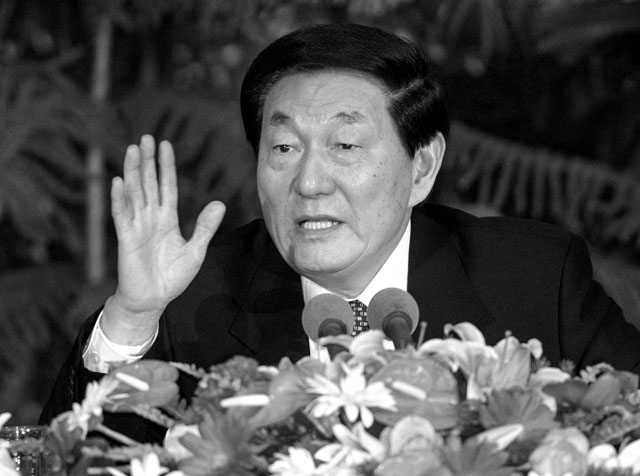
Zhu rose to prominence during a period of rapid economic change following the reforms initiated under former Chinese leader Deng Xiaoping. As premier, he sought to make China’s vast state-owned enterprises more efficient and financially sustainable.
His reform programme, however, came at a heavy social cost. The restructuring of state-owned enterprises resulted in millions of job losses as inefficient companies were downsized or shut down. The measures also brought Zhu into conflict with Communist Party conservatives and powerful managers of state-run companies.
Despite the controversy, the reforms strengthened the competitiveness of China’s industrial sector and helped lay the foundation for the country’s rapid economic expansion in the years that followed.
Born in Hunan province in October 1928, Zhu studied electrical engineering at Tsinghua University and joined the Communist Party in 1949. His early political career was disrupted by China’s political upheavals. While working with the country’s state planning agency, he was labelled a “rightist” after criticising Mao Zedong’s economic policies.
During the Cultural Revolution, Zhu was removed from his professional position and spent years doing manual labour on a farm, where he raised pigs and cultivated rice.
His fortunes changed after he was rehabilitated in 1978, when China was entering a new era of economic reform. He subsequently rose through the government ranks and emerged as one of the country’s most influential economic policymakers.
Zhu became mayor of Shanghai in 1987 and later served as China’s vice premier from 1991. He entered the Communist Party’s Politburo Standing Committee in 1992.
His tenure in Shanghai strengthened his reputation as an administrator focused on economic efficiency and reform. In 1998, he was appointed premier at a crucial stage in China’s economic development.
One of the defining achievements of Zhu’s premiership was China’s entry into the WTO in 2001. Membership opened the way for deeper integration with global markets and contributed to the rapid expansion of Chinese exports. China subsequently emerged as one of the world’s leading manufacturing and exporting powers.
Zhu’s efforts to push through the difficult reforms required for WTO membership cemented his reputation as one of the most consequential officials of China’s reform era.
At the same time, his restructuring of state-owned enterprises caused widespread disruption. Millions of workers lost their jobs as the government closed or downsized companies that were considered inefficient. For many workers who had relied on state enterprises for employment and welfare, the reforms brought considerable hardship.
Zhu stepped down as premier in 2003 and largely withdrew from frontline politics. He maintained a relatively low public profile after leaving office and remained associated with Tsinghua University.
He also supported rural education initiatives, with royalties from his books reportedly being used to contribute to education in rural areas.
Zhu Rongji’s legacy remains closely tied to one of the most transformative periods in modern China’s economic history. His willingness to confront entrenched interests, restructure state-owned enterprises and push China into the global trading system made him a central figure in the country’s rise as an economic powerhouse.
While his policies carried significant social costs, Zhu’s tenure is widely remembered for reshaping China’s economy and accelerating its integration with the global market.