Daijiworld Media Network – New Delhi
New Delhi, Aug 13: India ranks third globally in the number of organ transplants performed, but the country continues to face a massive gap between the demand for organs and their availability, leaving millions of patients waiting for life-saving procedures.
A study published in The Lancet Regional Health – Southeast Asia found that India's transplant capacity in 2021 met only 7.2 per cent of the estimated demand for kidney transplants. The figures were significantly lower for other organs, with liver transplants meeting 1.5 per cent of demand, lung transplants 1.2 per cent and heart transplants just 0.2 per cent.
The country recorded a record 20,138 organ transplants in 2025. However, 16,612 of these involved living donors, while only 3,526 were carried out using organs from deceased donors.
Dr Chetan Kalal, DM Hepataologist and Liver Transplant Specialist at Saifee Hospital, Mumbai, said that organ donation involves several critical steps before it can result in a transplant.
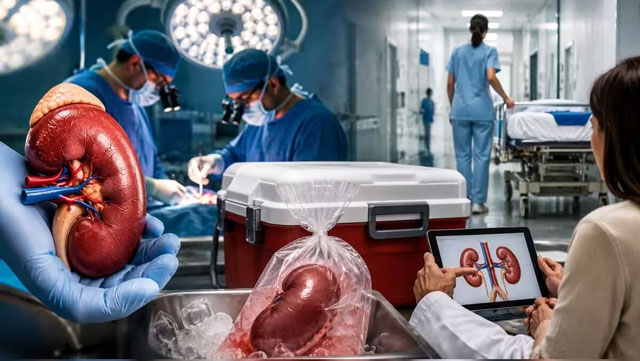
“A pledge becomes a transplant only if a hospital identifies a potential donor, certifies brain-stem death correctly, counsels the family and activates the retrieval network in time,” he said.
The Lancet study estimated that India required around 1.26 lakh kidney transplants, between 84,542 and 1.85 lakh liver transplants, 83,841 heart transplants and 11,253 lung transplants in 2021. The actual number of procedures remained far below these requirements.
The demand is expected to rise further in the coming years due to an ageing population and the growing burden of chronic diseases. By 2040, India could require around 1.44 lakh kidney, 2.1 lakh liver, 95,711 heart and 12,846 lung transplants annually.
The availability of transplant facilities is also uneven across the country. Tamil Nadu, Delhi-NCR, Kerala, Maharashtra and Telangana account for around 80 to 96 per cent of transplant procedures, despite representing only about 29 per cent of India's population.
Experts say the shortage cannot be attributed solely to a lack of willingness among people to donate organs. The process also depends heavily on hospitals being able to identify potential donors, certify brain-stem death, counsel families and ensure timely retrieval and allocation of organs.
India recorded more than 2.58 lakh formal organ donation pledges in 2025. However, the number of deceased-donor transplants remained relatively low compared with living-donor procedures.
Of the 20,138 transplants performed last year, nearly 82 per cent involved living donors, placing a significant burden on family members willing to donate organs to relatives.
Dr Kalal said India must now focus on converting donation pledges into actual donations by strengthening hospital systems and improving the deceased-donation network.
Apart from donor availability, several other factors contribute to the transplant gap, including inadequate infrastructure in several states, a shortage of specialised transplant centres and trained personnel, delays in organ retrieval and allocation, financial constraints and unequal access to treatment.
Social and cultural factors also continue to influence organ donation.
India's deceased organ donation rate remains significantly lower than that of countries such as Spain and the United States, highlighting the need for stronger awareness as well as improvements in the country's organ donation and transplantation infrastructure.
Experts say strengthening the entire donation-to-transplant chain will be crucial if India is to bridge the widening gap between the number of patients requiring transplants and the organs available to save their lives.