Daijiworld Media Network - Panaji
Panaji, Aug 16: Goa Police have sought the assistance of courier and postal service operators and delivery partners to curb the growing use of parcel networks for drug trafficking in the coastal state.
The initiative follows a recent case in which hashish was allegedly smuggled into Goa after being concealed inside a steam iron and sent as part of a courier package. The parcel was being delivered by an unsuspecting driver when police intercepted the consignment.
Concerned that traffickers may increasingly exploit courier and postal networks, the Goa Police have launched an awareness initiative as part of a broader three-year roadmap under the 'Nasha Mukt Bharat Abhiyan'.
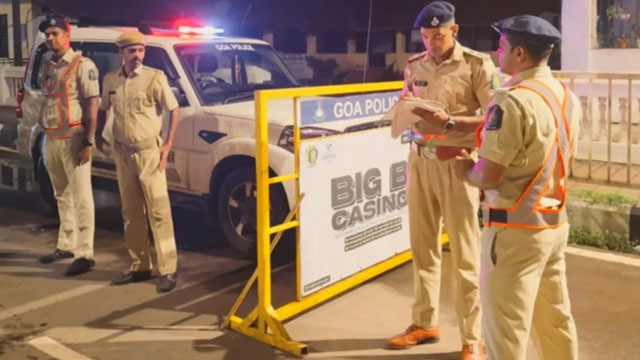
Senior police officials recently held an awareness meeting with at least 75 representatives from courier and postal service providers operating across Goa. The Anti-Narcotics Cell briefed the participants about emerging methods used by traffickers to conceal and transport narcotics, particularly cannabis and hashish, through small courier parcels and postal services.
Police said traffickers are increasingly using a 'dead-drop' method, in which buyers transfer money to sellers and are subsequently provided coordinates to collect the drugs from a particular location. In several cases, the narcotics are transported by unsuspecting delivery personnel who believe they are carrying legitimate parcels.
The police meeting focused on sensitising courier and postal operators to concealment techniques and identifying suspicious consignments. Officials advised them to pay particular attention to parcels booked under pseudonyms, those carrying incomplete sender or receiver details, unusual packaging and high-value consignments with declarations that do not match the contents or circumstances.
"Courier and postal service providers are key stakeholders to prevent the misuse of their services by drug traffickers. We flagged the importance of proactive vigilance, strict adherence to KYC norms, verification of consignor and consignee details of parcels, and timely reporting of suspicious consignments to law enforcement agencies," a senior police official said.
The official said the dead-drop method was becoming increasingly popular because it provided traffickers with a degree of anonymity. Since drugs are concealed inside ordinary parcels, delivery personnel often remain unaware of what they are transporting.
Police cited the recent steam iron case as an example of how traffickers attempt to conceal narcotics inside everyday household items.
According to an analysis by the Anti-Narcotics Cell shared at a recent zonal coordination meeting, the drugs most commonly seized in Goa include ganja, charas, LSD, MDMA or ecstasy and cocaine.
Police said cocaine is trafficked internationally and reaches Goa through other states, including Delhi and Karnataka. Ganja is brought into Goa from Jharkhand and Odisha, while charas is sourced from Himachal Pradesh and Nepal. LSD is largely brought in from Kerala, while methamphetamine is sourced from Kerala and Bengaluru. Ecstasy and MDMA are trafficked into Goa from Kerala, Maharashtra and Delhi.
A similar police assessment in 2023 found that cocaine was being sourced from South American countries and brought into Goa through sea routes, mainly concealed in shipping containers. LSD paper was reportedly transported by air and concealed inside books in luggage, while hashish or charas was brought from Himachal Pradesh, other northern states and Nepal through rail and bus routes.
The police presentation also highlighted the use of social media platforms, courier services, rented premises, tourist gatherings and nightlife events for the procurement, storage and distribution of narcotics.
"Coastal belts, tourist areas, nightlife zones, and party locations remain vulnerable to drug-related activities," the report stated, adding that drug trafficking and consumption were mainly noticed in tourist-centric and sensitive areas.
According to police, both local residents and inter-state offenders, as well as foreign nationals, have been found involved in drug-related offences in the state.
The number of arrests in narcotics-related cases has also increased in recent years. Goa Police arrested 166 people, including 21 foreign nationals, and registered 140 cases in 2023. The number of arrests rose to 192 in 2024 and 213 in 2025, while cases increased to 162 and 163 respectively.
In 2026, till August 12, police had registered at least 122 cases and arrested 135 people in connection with narcotics offences.
The department's roadmap to tackle drug trafficking is based on four key pillars — enforcement, intelligence and operations; control of precursors and synthetic drugs; demand reduction and harm reduction; and capacity building and coordination.
Police also briefed courier operators about the MANAS National Narcotics Helpline and urged them to report suspicious consignments and information related to drug trafficking through the 1933 helpline.
A WhatsApp group has also been created to facilitate coordination between the police, courier operators and delivery partners.
Police have asked delivery personnel to immediately report suspicious parcels, particularly those found near schools, clubs and other vulnerable locations along the coastal belt.
Officials said the coordination mechanism would also help police identify emerging trafficking patterns and trace networks back to their sources.
However, police acknowledged that the absence of a specific regulatory framework governing private courier services remains a challenge in monitoring the movement of suspicious consignments.