Daijiworld Media Network - Panjim
Panjim, Sep 5: The recently developed Yog Setu promenade in Panjim, promoted as a serene corridor celebrating wellness and culture, has come under public criticism over alleged flaws in its architectural design.
Citizens and visitors have raised concerns after statues installed along the pathway were found holding stagnant rainwater, potentially turning the public art installations into breeding grounds for mosquitoes.
The Yog Path, developed under the Imagine Panjim Smart City Development initiative, features several sculptures depicting different yoga postures, or asanas. However, one sculpture portraying an inverted yoga pose has a concave surface without proper drainage outlets. Following recent rains, the hollow portion of the sculpture has accumulated stagnant water.
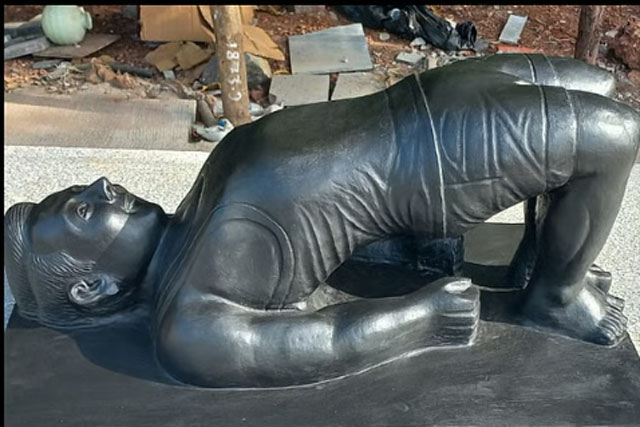
With vector-borne diseases such as dengue and malaria continuing to pose a threat during the rainy season in Goa, local residents, visitors and morning walkers have expressed concern over the lack of proper maintenance and oversight.
“The concept behind Yog Setu was meant to promote tranquillity and health, but the execution overlooks basic civil design principles,” a local resident said. “Art in open public spaces must be weather-resistant and self-draining, especially in a coastal state that receives heavy monsoons.”
Public health experts have repeatedly urged civic authorities to eliminate stagnant water from urban areas to prevent mosquito breeding and reduce the risk of vector-borne diseases.
Citizens are now demanding that Imagine Panjim Smart City Development Limited (IPSCDL) and the maintenance contractors take immediate corrective measures, including creating discreet drainage holes in the affected sculptures, to prevent potential health hazards along the Mandovi promenade.