Daijiworld Media Network - Jerusalem
Jerusalem, Oct 27: Israelis are heading to the polls in a closely contested election that could shape the country's political future, with incumbent Prime Minister Benjamin Netanyahu and former military chief Gadi Eisenkot emerging as the leading contenders.
Polling published on Friday suggests a near neck-and-neck race between Netanyahu and Eisenkot. However, neither political bloc is projected to secure the 61 seats required for a parliamentary majority, raising the possibility of prolonged coalition negotiations or another election.
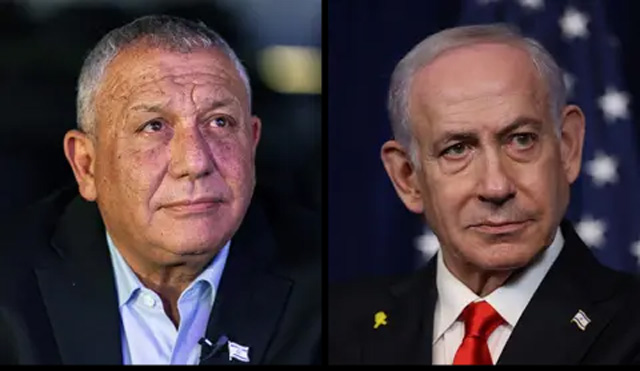
Security has dominated the campaign, with opposition parties blaming Netanyahu for the unprecedented security failure that preceded the Hamas-led attacks on Israel on October 7, 2023. The attacks killed nearly 1,200 people and saw 251 others taken hostage to Gaza.
Opposition leaders have called for an independent commission of inquiry into the attacks, a proposal Netanyahu has resisted, arguing that such an investigation would be biased against him.
Netanyahu has continued to present himself as the leader best equipped to protect Israel, citing what he describes as strategic successes in the country's regional conflicts and his close relationship with US President Donald Trump.
Eisenkot, who leads the newly formed Yashar Party, is the central figure in the opposition's so-called change bloc, which brings together parties with differing ideologies but a shared goal of ending Netanyahu's tenure.
The bloc includes former prime minister Naftali Bennett and Avigdor Lieberman, both known for their hardline security positions, as well as Yair Golan, a left-leaning former general.
Netanyahu, who first became prime minister in 1996, is seeking another term through an alliance with far-right and ultra-Orthodox parties that form his current governing coalition, widely regarded as the most right-wing in Israel's history.
Two Arab party blocs are also contesting the election. Arab citizens make up about one-fifth of Israel's population, and their parties could potentially influence coalition formation.
However, nearly all leading Jewish parties have ruled out partnering with them.
The opposition has also raised concerns over democratic institutions under Netanyahu. He faces an ongoing corruption trial, which he denies, and continues to pursue controversial judicial reforms that triggered mass protests before the October 7 attacks.
In the final days of the campaign, Israeli media reported that Netanyahu had pushed for military action that could lead to a confrontation with Iran before the election. Reports also suggested he had urged Trump to approve fresh strikes on Iran, but the US president declined. Netanyahu denied both accounts.
He also drew attention after posting an AI-generated image depicting a nuclear bomb striking Tel Aviv, warning that he was the only leader capable of protecting Israel if Iran acquired nuclear weapons. Eisenkot described the move as hysterical.
Military conscription has emerged as another major campaign issue. Netanyahu's government has failed to enforce a Supreme Court ruling requiring ultra-Orthodox Jewish men engaged in full-time religious study to undertake military service, a contentious issue as thousands of other Israelis have been called up for recent conflicts.
Eisenkot holds a broadly similar position to Netanyahu on Gaza. He has pledged to end Hamas rule in the territory within 18 months, either through a US-led peace plan or, if necessary, military action.
Israel has continued carrying out near-daily strikes in Gaza since a ceasefire was agreed last year, saying it is targeting Hamas operatives. More than 74,000 people have been killed since the war began, according to Gaza's Hamas-run health ministry. The figures are considered reliable by the United Nations.
Israel has faced mounting international criticism over its conduct of the war, while relations with several international partners have deteriorated.
On the occupied West Bank, Eisenkot broadly supports Israeli settlements, which are considered illegal under international law. However, he has called for action against extremist Jewish settlers whose attacks have reached record levels, according to UN figures. He has also spoken of creating conditions for Palestinian autonomy or a limited state under ultimate Israeli security control.
The idea of a two-state solution, involving an independent Palestinian state living alongside Israel in peace, has largely disappeared from mainstream Israeli political debate.
Some observers have speculated that Arab parties could informally support an Eisenkot-led minority government. However, Lieberman, a potential coalition partner, has ruled out participating in such an arrangement.
These competing positions have made the path to a parliamentary majority uncertain, with the final outcome likely to depend on coalition negotiations and possible compromises after the results are announced.
Around 70,000 Israelis have reportedly returned from abroad to vote, while approximately 500,000 people are expected to cast ballots for the first time.
Israeli broadcasters are scheduled to release exit polls at 10 pm on Tuesday (8 pm GMT). The projections will offer an early indication of the outcome, although exit polls can differ significantly from the final results.
Netanyahu's Likud party is set to gather in Jerusalem, while Eisenkot's Yashar Party will assemble in Tel Aviv to follow the results.
Hundreds of thousands of Israeli soldiers and reservists will also vote. Many of their ballots will not begin to be counted until Wednesday, potentially affecting the final balance, as right-wing parties are believed to have strong support among military personnel.
Although the election is widely viewed as a contest between Netanyahu and Eisenkot, another leader could emerge as prime minister if their party's support for a coalition becomes conditional on securing the top post.
A major concern is the possibility of political deadlock, with neither bloc able to form a majority and no minority government emerging. In that case, another election would be called, and Netanyahu would remain as interim prime minister.
Israel experienced a similar period of instability between 2019 and 2022, when the country held five elections as political parties repeatedly failed to reach lasting agreements.