Daijiworld Media Network – Bengaluru
Bengaluru, Nov 7: A subtle change in the language of a mobile phone reply, suspicions raised by friends and the testimony of an 11-year-old boy who had witnessed the disposal of four bodies eventually helped the Bengaluru police unravel a gruesome series of murders that has shocked the state.
The alleged killer, Indushekhar, had reportedly murdered seven members of a family and was moving around with an 11-year-old boy, who was potentially his next target. The child spent nearly five days with the accused before police rescued him on November 4, bringing an end to what could have turned into another tragedy.
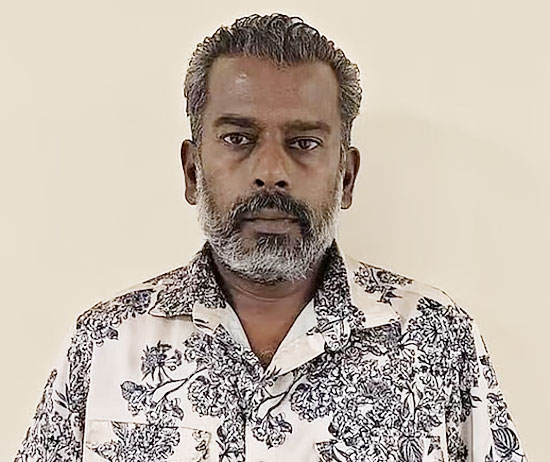
One of the crucial breakthroughs in the investigation came from an unexpected source – a Kannada message sent from the mobile phone of one of the victims.
According to police sources, after allegedly killing Shankar and his wife Nalini, Indushekhar began using Shankar's mobile phone to respond to messages from his friends. However, something unusual caught their attention. Shankar generally did not reply to messages in Kannada, but the responses coming from his phone were in Kannada.
The change in language and messaging style raised suspicions among his friends. They reportedly discussed the matter and advised Nalini's mother to approach the police. The accused had allegedly attempted to create the impression that the family was away on a trip, sending messages and voice recordings to relatives suggesting that they were on an 'All India tour'.
The unusual Kannada replies became an important clue, prompting the police to look into the family's whereabouts and initiate an investigation.
As the investigation progressed, a horrifying account emerged from the couple's 11-year-old son, Suresh (name changed), a class 5 student who had been staying with the accused for nearly five days.
Suresh lived with his parents, Shankar and Nalini, at Dayananda Nagar in Rajajinagar. According to the police, the couple had visited Indushekhar's house on October 30 after he invited them for dinner. Preliminary investigations suggest that the victims were allegedly served alcohol before being bludgeoned to death with a stone.
The boy was reportedly asleep when the murders took place. Police suspect that the accused may have kept the television volume high to prevent the sounds of the killings from being heard.
The accused allegedly placed the bodies of Shankar and Nalini in the boot of his car and travelled with the child in the same vehicle. During questioning, the boy told investigators that he had seen four gunny bags inside the car. He also claimed that whenever he tried to touch the bags, Indushekhar and his daughter scolded him.
Speaking to reporters, Suresh recalled that after dinner at Indushekhar's house, he had slept beside his mother. When he woke up the following morning, his father was missing. As he tried to leave with his mother, Indushekhar's daughter reportedly called him back inside.
"I heard my mother screaming. After some time, that man (Indushekhar) came and took me outside," the boy reportedly recounted.
The child further revealed that he had travelled with the accused to several places, including Kukke Subrahmanya, Dharmasthala, Sringeri and the airport.
The most disturbing part of his account was his description of how the bodies were allegedly disposed of. He told reporters that the accused would wait until there was little or no traffic before dumping the bodies somewhere. He also said that a foul smell was coming from the car.
"Whenever I tried to touch those gunny bags, they would scold me. There was a bad smell coming from the car. They used to throw the bodies somewhere when there was no traffic. I saw a total of four bags," he said.
The boy also revealed that Indushekhar had carried six mobile phones belonging to the victims in a black bag inside the car.
Investigators believe that the accused used the child to send voice messages to family members, making them believe that everyone was travelling together on an 'All India tour'.
The boy's statement has now become an important part of the investigation, with police recording his account of the journeys, the gunny bags and the accused's movements.
What initially appeared to be a family that had gone on a trip gradually turned into a chilling murder investigation. A seemingly insignificant difference in the language of a mobile phone reply alerted friends, their suspicions reached the police, and the investigation ultimately led to the rescue of an 11-year-old boy who had spent five days in the company of the alleged killer.
The timely intervention of the police not only saved the child's life but may also have prevented further killings, as the boy was reportedly the accused's next target.