Media Release
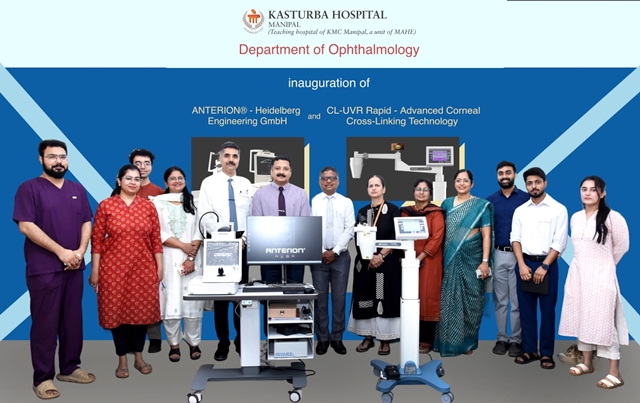
Udupi, Nov 11: The Department of Ophthalmology at Kasturba Hospital, Manipal has commissioned two new systems for the evaluation and treatment of keratoconus, an eye condition that can affect vision if it is not detected and managed in time. The systems are the Anterion® corneal tomography and topography platform and the CXL UVR Rapid Collagen cross-linking system.
The facility was inaugurated by Dr Sudhakar Kantipudi, chief operating officer – Teaching Hospitals, MAHE, at a programme held at the Department of Ophthalmology ahead of World Keratoconus Day, which is observed every year on November 10 to raise awareness about the condition and the importance of early detection.
Dr Avinash Shetty, medical superintendent, Kasturba Hospital; Dr Yogish Kamath, head of the Department of Ophthalmology; Dr Dixitha V, Cornea Specialist; and faculty members, clinicians, staff and patients were present on the occasion.
Keratoconus is a condition in which the cornea, the clear front surface of the eye, gradually thins and bulges outward into a cone shape, causing blurred and distorted vision. It usually begins in the teenage years and may progress over time. Early detection is important, as timely treatment can help limit further deterioration of vision.
The Anterion® platform combines high-resolution corneal tomography and topography, allowing a detailed assessment of the shape and thickness of the cornea. This helps ophthalmologists detect early changes, monitor the condition over time and plan treatment.
Corneal collagen cross-linking is an established treatment for progressive keratoconus, in which riboflavin (vitamin B2) eye drops and controlled ultraviolet light are used to strengthen the collagen fibres of the cornea, with the aim of slowing or halting the progression of the disease in suitable patients. The rapid protocol shortens the duration of the procedure.
With both systems now in place, corneal evaluation and cross-linking treatment are available within the department, and the suitability of treatment is decided by the treating ophthalmologist after a detailed evaluation.
Speaking on the occasion, Dr Sudhakar Kantipudi said, "The addition of these systems strengthens the diagnostic and treatment facilities available in our Department of Ophthalmology for corneal conditions. Inaugurating them ahead of World Keratoconus Day is also an opportunity to create awareness about this condition and the importance of early diagnosis."
Dr Avinash Shetty, medical superintendent, Kasturba Hospital, said, "Keratoconus often begins in the teenage years, and its early signs, such as frequently changing spectacle power or blurred and distorted vision, are easily mistaken for a simple need for new glasses. We encourage parents and young people who notice such symptoms to consult an eye specialist, as early diagnosis allows for timely treatment."