Daijiworld Media Network - Mumbai
Mumbai, Nov 16: Transport enthusiasts and experts have submitted a proposal to the Maharashtra government and the Brihanmumbai Electric Supply and Transport (BEST) undertaking, seeking the reintroduction of high-capacity articulated electric buses, popularly known as bendy buses, in major cities.
The proposal, initiated by bus enthusiast Shubham Padave, follows the launch of the 18-metre-long EKA LF 18M articulated electric bus. It urges authorities to consider introducing these buses on busy routes in Mumbai, Pune and Nagpur to reduce congestion and provide commuters with a comfortable and sustainable transport option.
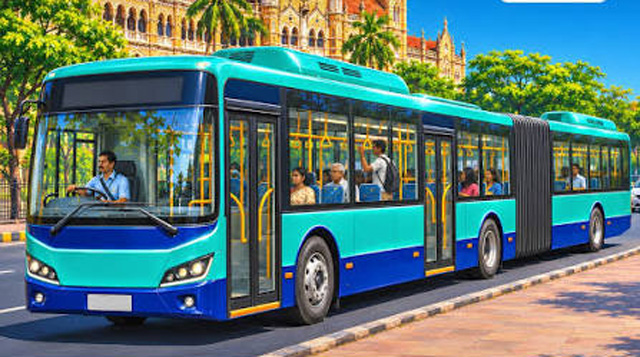
According to the proposal, an 18-metre articulated electric bus can carry around 130 passengers, nearly twice the capacity of a conventional 12-metre bus. Transporting 1,300 passengers would require just 10 articulated buses, compared with around 19 standard buses or 33 smaller nine-metre buses. This could reduce the number of bus movements by nearly 47 per cent compared with conventional buses.
The proposal identifies Pune and Pimpri-Chinchwad as suitable locations for a pilot project. According to the Institute for Transportation and Development Policy (ITDP) India, the Nigdi-Dapodi Bus Rapid Transit (BRT) corridor records around 1.5 lakh passengers daily, with approximately 55 buses operating per hour during peak periods.
The EKA 18M, manufactured by EKA Mobility, is a fully electric articulated city bus measuring 18 metres in length. It has a seating capacity of 53 passengers, a gross vehicle weight of 29 tonnes and a battery capacity of 322.5 kWh or 334 kWh. It offers an approximate driving range of 150 km per charge and supports roof-mounted pantograph charging.
Mumbai operated trailer and vestibule buses, including those run by BEST, until the late 1990s and early 2000s. The new proposal seeks to revive the concept with modern features such as air-conditioning, low-floor accessibility, digital passenger information systems and advanced charging facilities.
Several transport enthusiasts and commuters have welcomed the idea, recalling their experiences travelling on the older buses. However, some have raised concerns about their suitability for Mumbai's present road conditions, particularly while negotiating turns and changing lanes. They have stressed that dedicated bus lanes would be essential for their effective operation.
Transport expert A V Shenoy said articulated buses could be useful on major arterial roads such as the Western Express Highway, Eastern Express Highway, Santacruz-Chembur Link Road and Jogeshwari-Vikhroli Link Road, provided dedicated bus lanes were available.
He noted that Mumbai's roads had not widened and referred to a 2018 Mumbai Vikas Samiti report that had recommended midi buses. He also said articulated buses could offer more affordable and convenient travel than Metro services, with stops at shorter intervals.
Shubham Padave said the buses could serve busy BEST routes, railway and Metro connections, and commercial corridors in Mumbai where road conditions permit. Pune and Pimpri-Chinchwad could integrate them with their existing BRT infrastructure, while Nagpur could explore their use on Metro feeder and other high-demand routes.
The proposal comes amid growing interest in articulated electric bus technology across the country. Union Heavy Industries Minister H D Kumaraswamy has reviewed a flash-charging-based articulated electric bus system. Cities such as Berlin, Paris, Geneva, Singapore and Curitiba already operate articulated buses.
Aditya Rane, deputy manager at ITDP India, said articulated buses could nearly double passenger capacity and help reduce road congestion. He pointed out that their low-floor design and multiple wide doors allowed faster boarding compared with double-decker buses.
Rane said the buses would be suitable for arterial roads with a 15 to 18-metre right-of-way and service frequencies of five minutes or less. He added that a properly designed electric BRT system could offer a Metro-like travel experience at a lower capital investment through dedicated lanes, level boarding, integrated ticketing and pantograph charging.