Media Release
Mangaluru, Nov 16: The eighth edition of Makers’ Fete, the annual festival of creativity and discovery organised by the Centre for Advanced Learning (CFAL), was held on November 15 at the CFAL campus in Akashbhavan here. Drawing close to 400 registrations, the student-planned and student-run festival featured contests, student-built models, demonstrations and an art gallery, alongside hands-on university science experiences from SOLVE at NITK Surathkal and the Azim Premji University.
Inauguration and welcome
The festival was inaugurated by the chief guest, Ramachandra Hebbar, retired general manager, Regional Remote Sensing Centre – South, Indian Space Research Organisation (ISRO), Bengaluru.
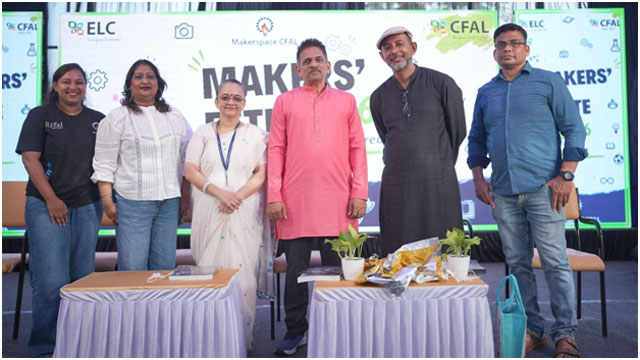
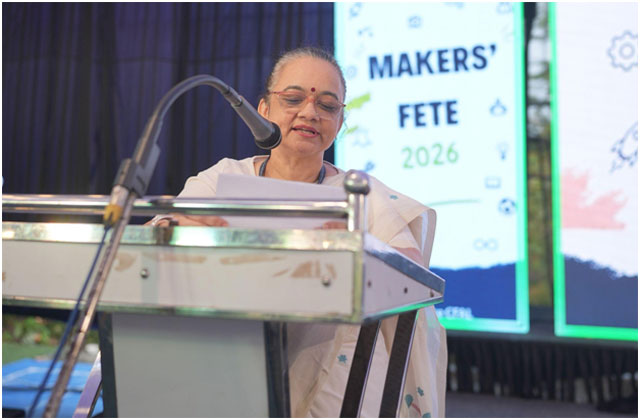
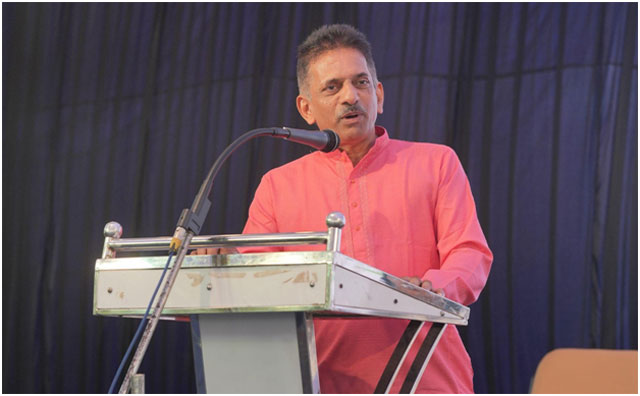
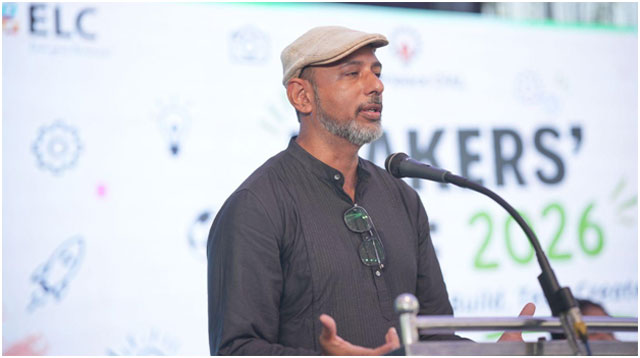
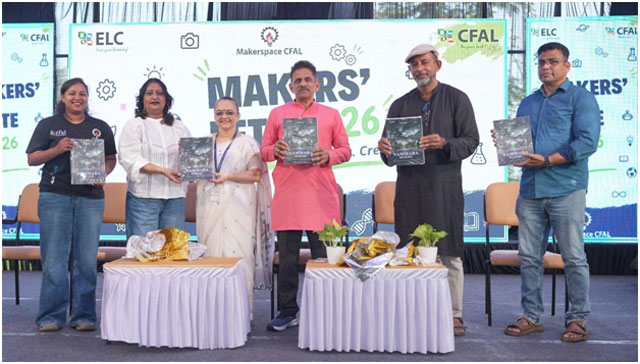
The inauguration was attended by the guest of honour, Nevil D'Souza, founder and managing partner of Inddo Tech Engineering, Mangaluru; Vijay Moras, trustee, The Learning Centre Trust; Dr Smitha Hegde, principal, CFAL; Purnima Prabhu, principal, Early Learning Centre; and Sujan Shetty and Harshitha Nayak, convenors of Makers’ Fete.
Dr Smitha Hegde welcomed the gathering and introduced the dignitaries. She described Makers’ Fete as a space for creative thinking and applying theoretical knowledge. She emphasised that innovation thrives in an environment of freedom and that Makers’ Fete provides students with the freedom and space to explore ideas, experiment and innovate.
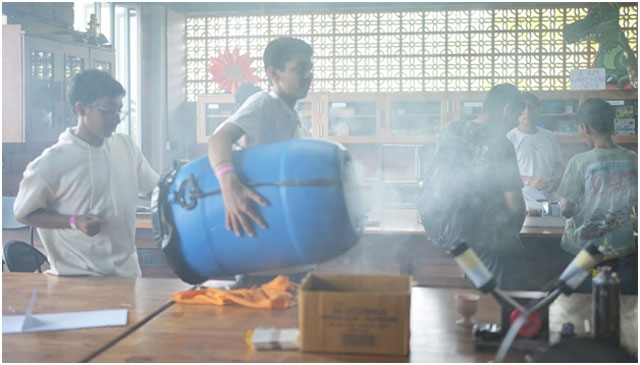
The fete was formally inaugurated with the lighting of the lamp, followed by the unveiling of its official poster through an elaborate chain-reaction mechanism. Set in motion by the chief guest, the contraption brought a series of interconnected actions into play, from falling dominoes to a ball navigating a maze, culminating in the grand reveal of the poster.
Address by the chief guest
Recalling his previous visit to Makers’ Fete, Ramachandra Hebbar said this year’s models and exhibits were even more impressive. Drawing parallels between the students' spirit of innovation and the developments taking place in the wider world, he spoke about how the liberalisation of the space sector has created opportunities for individuals and startups to build rockets and satellites. With nearly 300 to 500 startups, many led by entrepreneurs in their twenties, the sector is growing rapidly. Increased funding and support, he noted, are enabling young innovators to pursue ambitious ideas early, and CFAL offers an excellent example of how to nurture this spirit.
Hebbar also stressed sustainability, from the future of water to the role of trees and the need to preserve ecosystems and biodiversity. He appreciated Dr Smitha Hegde's Tree Census research as a meaningful step towards a better future. Describing Makers' Fete as a festival of innovation that gives young innovators a platform to turn ideas into solutions with wider social impact, he congratulated CFAL for creating an environment that encourages curiosity, creativity and innovation.
Address by the trustee
Vijay Moras, trustee of The Learning Centre Trust, posed a central question: What careers can children pursue, and, more importantly, what problems can they solve? Citing everyday challenges such as photographing an insect in motion, he illustrated how even simple tasks can call for innovative solutions.
He said CFAL aims to nurture students who can identify and solve problems that matter to their communities, the country, the world and the wider ecosystem. The focus, he added, is not only on future careers but also on equipping children to make meaningful contributions to society.
Makers’ Fete, he highlighted, gives students a platform to explore challenges, experiment and develop solutions. He acknowledged the journey Makers' Fete has undertaken over the past eight editions and emphasised the importance of continuing to expand its reach and impact, inspiring more young minds to identify challenges and develop meaningful solutions.
Book release: Nammara Mysuru
The inaugural programme also featured the release of Nammara Mysuru: Mysuru Tree Audit Report, documenting the Mysuru Tree Census, an initiative of the Centre for Advanced Learning and Research undertaken in partnership with the Bherunda Foundation.
The four core contests
Following the inaugural programme, the fete moved into its core activities, with four major contests providing participants a platform to build, innovate, explain and compete.
-
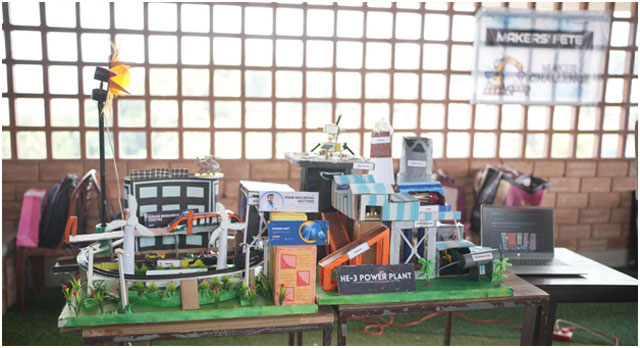
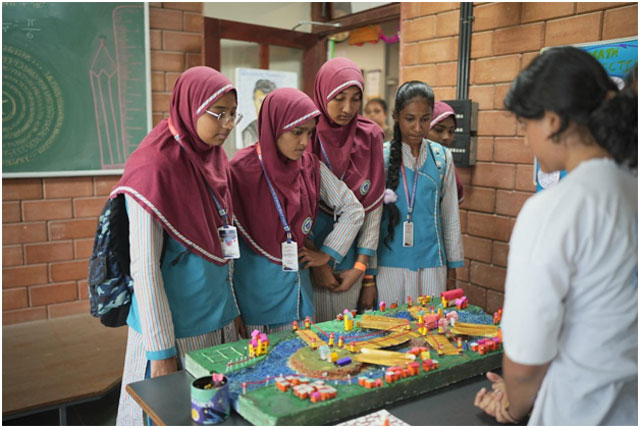
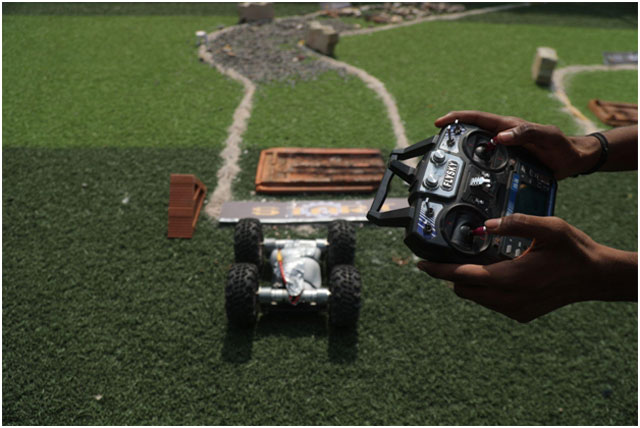
Maker Challenge: Participants designed, built and demonstrated original projects showcasing creativity and engineering skills. Entries included a He-3 power plant, a robotic underground cable fault detection system, a Mushak autonomous tracked rover and a magnetometer-based smart parking occupancy system.
-
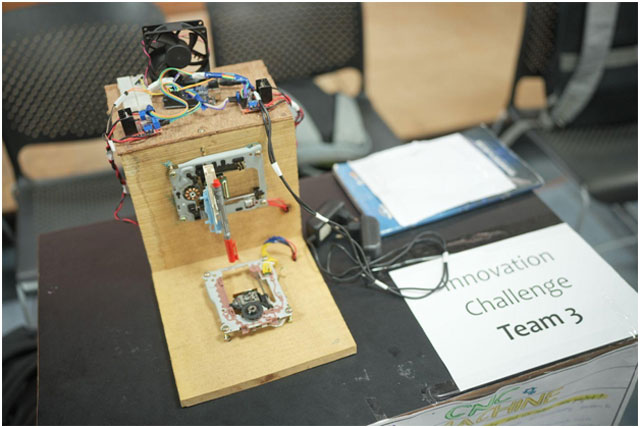
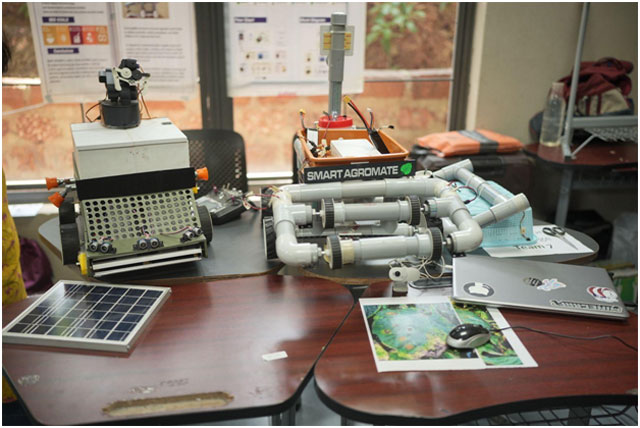
Innovation Challenge: Participants identified real-world problems and proposed practical solutions with projects that included a smart ambulance corridor, a forest-protection device aimed at preventing illegal tree cutting, a wheelchair for individuals with sight and hearing impairments, smart agriculture systems, a portable air quality monitor, a street-light system focused on women’s safety, the Mechatronix rover, the VoiceInk CNC plotter machine, and AtlasLink X1, a long-distance communication system that works without the internet.
-
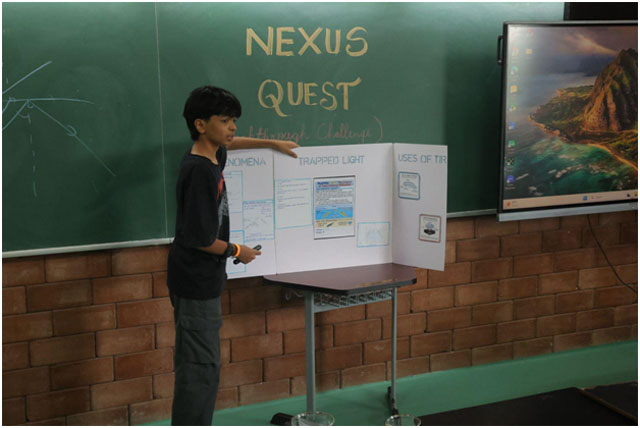
Breakthrough Challenge (Nexus Quest): Participants investigated scientific and mathematical concepts, examined evidence, developed reasoned explanations and presented their findings through creative and engaging formats. Topics explored included thorium and its role as a nuclear fuel, aerodynamic drag and gravity, microplastics in food and water, total internal reflection and its applications, and the brain and first-person experience, among others.
-
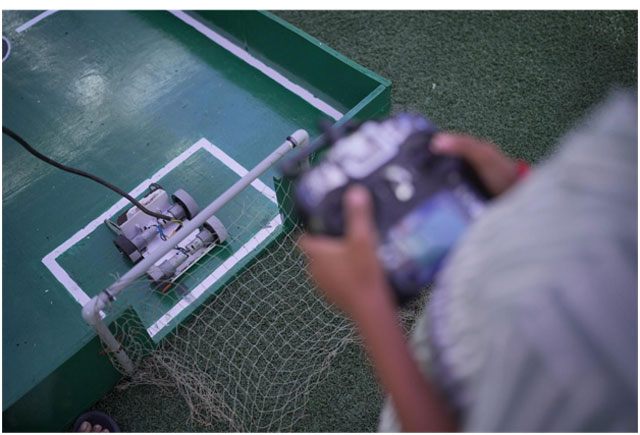
Bot Soccer: Participants designed and built robots to compete for goals in a playing arena. The contest tested mobility, precision, responsiveness and control, while challenging teams to adapt their strategies during play and apply engineering and problem-solving skills.
Hands-on demonstrations
Away from the contest arenas, hands-on demonstrations let visitors see science at work. CFAL students presented three exhibits:
-
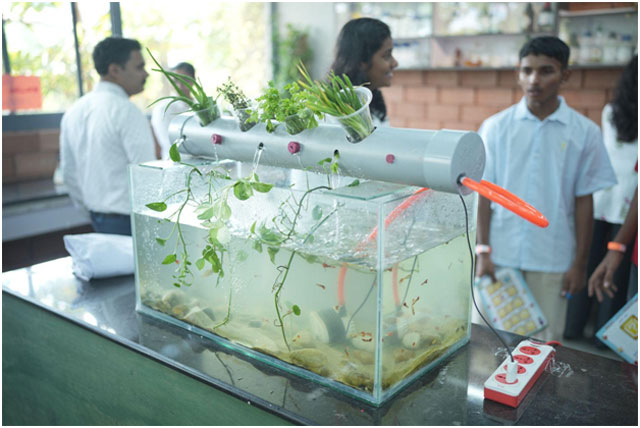
Bio Amuse: Explored nature, biodegradable materials, terrariums, betta fish behaviour, aquaponics, yeast balloon inflation and Beata Halassy’s contribution to cancer research, among others.
-
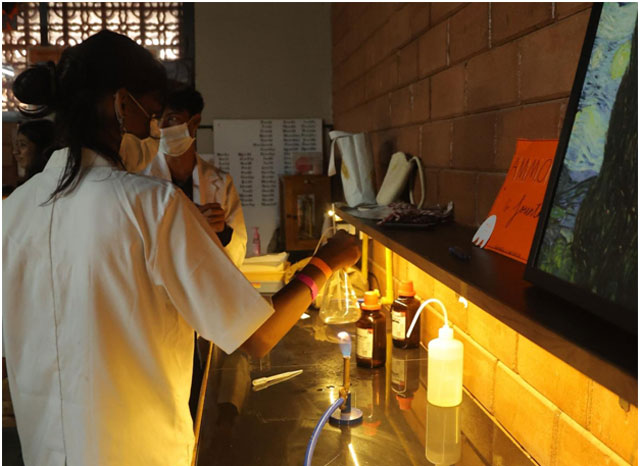
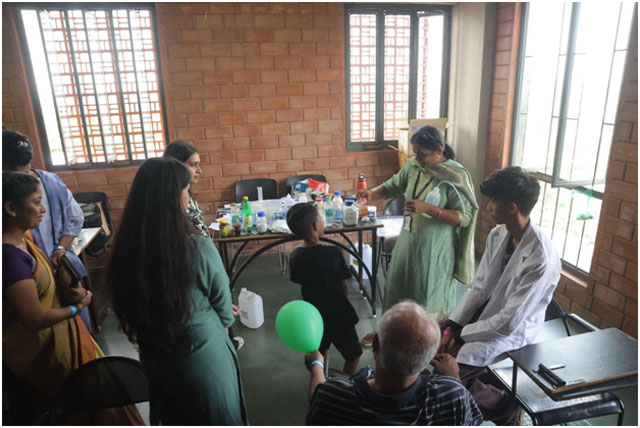
Chem Mystery: Featured demonstrations on hot ice, water electrolysis, luminescence, water-hardness testing, the Tollens test, the ammonia fountain and liquid nitrogen.
-
Galileo’s Gallery: Featured plasma and vortex cannons, density and pressure demonstrations, ripple-tank interference patterns, a stroboscope for visualising projectile motion, visualisation of Lissajous figures, demonstrations on light polarisation and water electrolysis.
-
Whispers of the Infinite (Math hands-on): Featured interactive mathematical models and puzzles which included demonstrations of the Josephus Problem and the Königsberg Bridge Problem, sections of cones, the Azul board game, fractal puzzles, Sudoku, a rope entanglement game and tangrams.
-
Robotics and Engineering Innovations: CFAL’s Makerspace and Robotics Club, in collaboration with the Robotics Club of NMAM Institute of Technology, Team Challengers of Sahyadri College of Engineering and Management, and SJEC AERO of St Joseph Engineering College, showcased innovative projects which included a hand-gesture-controlled robot, a line-following robot, a maze-solving robot, a 2 DOF robotic arm, a mecanum-wheel robot capable of moving in multiple directions, robots designed for mini soccer, and drones and aircraft models that offered a glimpse into the principles of flight and engineering.
More contests and challenges
The fete offered a range of additional challenges for makers and tinkerers. The Egg Drop Challenge tested participants’ protective designs, while the Ball Run Challenge involved using gravity and construction techniques to guide a ball through obstacles. Paper Rocket explored the principles of flight and accuracy; Build a Micro Camera Trap introduced participants to wildlife-monitoring technology; and RC Car Racing tested speed and precision.
Other challenges focused on problem-solving and quick thinking. Participants competed in Rubik’s Cube, Mystic Matrix (Sudoku), crossword and Byte Wars coding contests. Flash Fingers tested typing speed and accuracy, while Just A Minute (JAM) challenged participants to speak confidently on a surprise topic.
Creative activities included Origami, Crochet, the Battle of Bands and Treasure de CFAL, a clue-solving hunt across the campus.
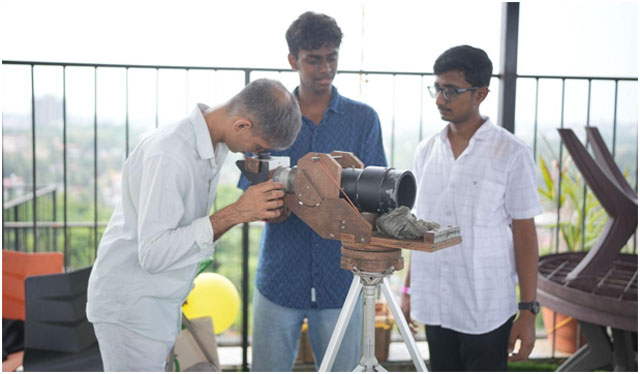
Visitors were also given a unique opportunity to step into a live Montessori classroom experience presented by the Early Learning Centre (ELC). A daytime astronomy session offered another engaging experience, introducing visitors to the wonders of astronomy.
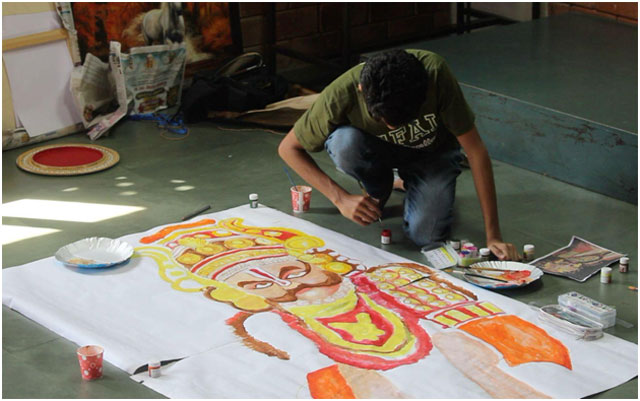
An art gallery showcased works by CFAL students and external artists, while food and gift stalls added to the festive atmosphere.
Where university science meets student curiosity
SOLVE at NITK Surathkal and the Azim Premji University complemented the student-led programme with university-level science experiences.
NITK Surathkal’s SOLVE: Engineering Laboratories Without Walls
SOLVE, a research and educational initiative of NITK’s Centre for System Design supported by the Ministry of Education’s Virtual Labs initiative, introduced visitors to remote-triggered laboratories. These allow researchers to operate real equipment over the internet and receive live data.
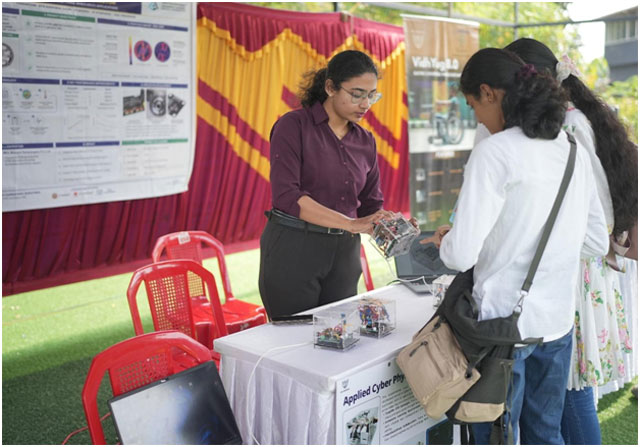
Demonstrations covered mechanical vibrations, electronics, sensors, control systems and engineering simulations, while drones, electronic prototypes and student projects illustrated real-world applications of physics, mathematics and computing.
Azim Premji University: Making complex science simple
The Azim Premji University’s Science in Action programme, which had previously engaged more than 300 high school students and teachers at CFAL, returned with interactive demonstrations.
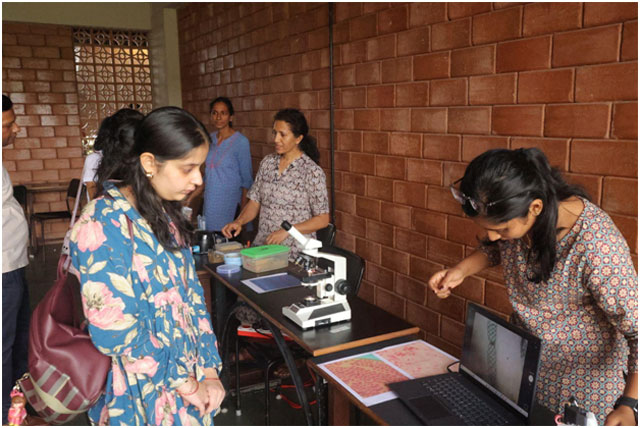
Physics demonstrations explored mirages and the bending of light. Biology activities included DNA isolation and electrophoresis, microscopic observation of normal and abnormal nuclei, and an examination of microorganisms found on human skin.
Psychology activities explored visual perception, attention, coordination and movement through experiments on visual processing, tracking, speed, accuracy and optical illusions. An electromyography (EMG) demonstration showed the relationship between muscle activity and movement.
The teacher education section examined everyday products and practices through science. Topics included the environmental impact of alternative sweeteners and disposable diapers, the interaction between iron tablets and coffee, the composition of calcium supplements, the potential harm of using hydrogen peroxide on wounds, and seaweed as a possible material for wound dressings.
Ideas made real, futures made possible
Throughout the year, CFAL students worked with teachers and, in some cases, parents to develop models, experiments and creative exhibits. Makers’ Fete 2026 brought these efforts together in a celebration of curiosity, collaboration and innovation. It showed how the freedom to explore helps students build confidence, collaborate and discover their potential to shape the future.
About CFAL
The Centre for Advanced Learning (CFAL) builds strong foundations in mathematics and science and prepares students for premier national examinations, including JEE, NEET and Olympiads, as well as entrance exams for institutes such as ISI, CMI and IISER. The institution is built around a culture of curiosity, discipline and science learning.