Daijiworld Media Network - Mumbai
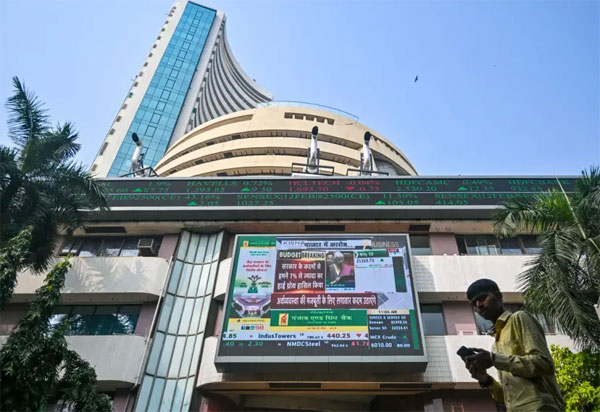
Mumbai, Nov 18: Indian equity markets ended sharply lower on Wednesday as widespread selling in consumer durables, metal, information technology and automobile stocks dampened investor sentiment.
The BSE Sensex declined 500.38 points, or 0.61 per cent, to close at 82,031.81, while the NSE Nifty fell 159.45 points, or 0.63 per cent, to settle at 25,227.95. The losses erased gains recorded during the previous two trading sessions.
Commenting on the Nifty's technical outlook, market experts said profit booking dominated Wednesday's session, with the index forming a bearish candlestick pattern, although buying interest emerged at lower levels.
"On the downside, 25,000 remains a crucial support, while 25,300 and 25,500 are immediate resistance levels. Overall, Nifty is expected to trade within the 25,000–25,500 range," analysts said.
Among the Nifty constituents, Titan Company emerged as the biggest loser, followed by Hindalco Industries and HDFC Life Insurance Company. Selling pressure in these stocks contributed significantly to the weakness in the benchmark indices.
The broader market also remained under pressure, with mid-cap and small-cap stocks underperforming the frontline indices. The Nifty MidCap 100 index declined 1.22 per cent, while the Nifty SmallCap 100 index fell 0.35 per cent.
Sectorally, consumer-oriented stocks witnessed the heaviest selling. The Nifty Consumer Durables index led the losses, followed by the Nifty Metal, Nifty IT and Nifty Auto indices. Weakness across these sectors outweighed gains in select market segments.
However, PSU banking stocks showed resilience, with the Nifty PSU Bank index emerging as one of the best-performing sectoral indices during the session. Media stocks also bucked the broader trend and ended in positive territory.
Meanwhile, the Indian rupee traded higher, gaining around 0.08 per cent to 93.44 against the US dollar. Sustained net buying by foreign institutional investors (FIIs) over the past few weeks continued to provide support to the domestic currency.
Market experts said continued foreign fund inflows and lower commodity prices could help maintain the rupee's positive momentum.
"The near-term trading range is seen between 93.00–93.75," they noted.