Daijiworld Media Network - Mumbai
Mumbai, Nov 20: The increase in Securities Transaction Tax (STT) from April 1 appears to have prompted more traders to move away from the futures market and shift towards options, further widening the imbalance in India's equity derivatives segment.
Notional turnover in index futures and stock futures declined by 52% and 18%, respectively, in October compared with March, before the revised STT rates came into effect. During the same period, turnover in index options fell by 6%, while stock options recorded a 10% increase.
The sharp fall in futures activity pushed the overall share of options in the equity derivatives market to 99.5% at the end of October, compared with 99.36% in March.
The growing dominance of options trading could pose another challenge for the Securities and Exchange Board of India (SEBI), particularly as more than nine out of 10 individual traders reportedly lose money in the segment. In late 2024, SEBI had introduced six measures to curb retail participation in derivatives, especially index options.
"Higher cost may have played a part in bringing down futures volumes," said Ashish Nanda, chief digital business officer of Kotak Neo.
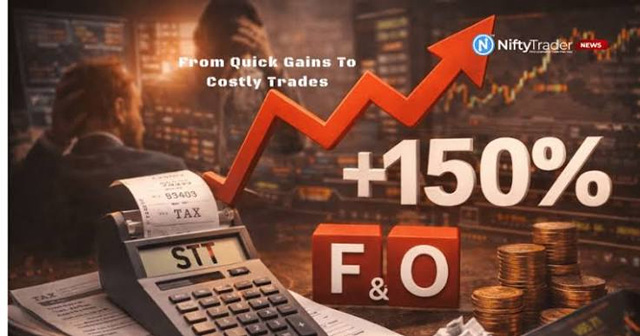
The STT on the sale of options was increased by 50%, from 0.10% to 0.15% of the premium amount. However, the tax on futures sales rose by 150%, from 0.02% to 0.05% of the entire notional contract value, making futures significantly more expensive to trade.
According to market experts, many intraday and overnight traders who earlier dealt in futures have shifted to options following the STT hike and the comparatively lower overall transaction costs.