Daijiworld Media Network – New Delhi
New Delhi, Nov 23: India has retained its position as Asia's third-most powerful country in the 2026 Asia Power Index, published by Australia's Lowy Institute, with its overall score rising to 40.5 points. The latest ranking highlights India's growing regional influence despite a slight decline in its economic capability, with the gap between India and China narrowing to its smallest level since the index was launched in 2018.
The United States secured the first position with 78.9 points, followed by China in second place with 73.6 points. India ranked third with 40.5 points, while Japan and Russia occupied the fourth and fifth positions with 38.6 and 32.3 points, respectively.
The 2026 edition is the eighth edition of the annual Asia Power Index and assesses 27 countries and territories across the region using 131 indicators under eight major measures of power. These include economic capability, military capability, resilience, future resources, economic relationships, defence networks, diplomatic influence and cultural influence.
India's strongest performance was recorded in the area of future resources, where it secured third place with 56.2 points. This reflects the country's long-term economic potential and improved growth outlook. Its diplomatic influence remained another major strength, with a score of 70.3 points, placing it fourth in the category.
India also retained third place in economic capability despite its score declining slightly to 26.4 points. The Lowy Institute attributed the decline partly to the weakening of the rupee, changes in the International Monetary Fund's methodology for measuring economies and a nearly $20-billion fall in outbound investment.
In military capability, India secured fourth place with 48.5 points, while it ranked fifth in resilience with 55.4 points. Its cultural influence improved to 43.8 points, securing fourth place in the category.
India recorded notable improvements in defence networks and economic relationships, moving up two positions in both categories to ninth and seventh, respectively. Increased regional defence engagement and BrahMos missile sales to Southeast Asian countries contributed to the improvement in defence networks. Relative stability in trade and investment relationships also helped India improve its economic relationships ranking.
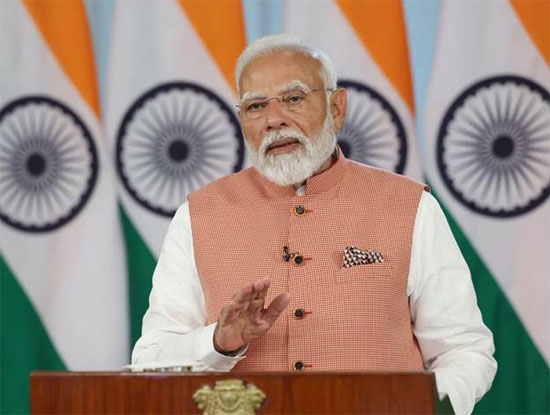
The report further noted that Prime Minister Narendra Modi was rated the second-most effective regional leader in Asia, behind Chinese President Xi Jinping. His assessment improved significantly, lifting India's standing in the area of regional diplomatic leadership.
One of the significant findings of the 2026 index is that the power gap between India and China has narrowed to its lowest level since the index was first introduced in 2018. However, China's overall power remains approximately 80 per cent higher than India's, indicating that a considerable gap continues to exist between the two Asian nations.
The United States, meanwhile, continued to lead the rankings, although its advantage over China narrowed to its smallest level since the index began. The report attributed this development largely to declining American diplomatic influence and military challenges.
The Lowy Institute's Asia Power Index evaluates the ability of countries to shape their external environment by examining their economic and military resources, diplomatic relationships and influence across the region. The 2026 findings indicate that India is strengthening its position as a major Asian power, with growing diplomatic, cultural and defence engagement helping offset weaknesses in certain economic indicators.