By Dr Keerthan Rao
Mangaluru, Nov 27: India being the diabetic capital of the world has around 10 million people affected by retinopathy.
Retina is a part of the eye which usually perceives the images and sends the visual stimulus to the brain via the optic nerve. Although diabetes affects almost every part of the eye, one of the most common vision threatening complication is retinopathy where there is disturbance in the microvasculature.
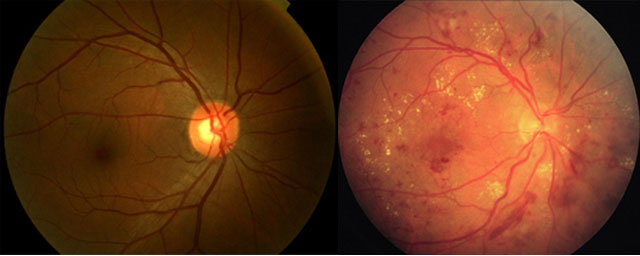
Normal retina (left) and diabetic retinopathy
It is usually associated with longer duration of diabetes, uncontrolled diabetes and deranged lipid profile. In retinopathy, the retina has less oxygen supply which leads to the formation of new blood vessels which will help in easing the demand. But the new blood vessels are very fragile and they bleed easily. There are 2 types of retinopathy. The first is non proliferative diabetic retinopathy, where new blood vessels have not yet formed, but microvascular changes are present. The second is the proliferative stage where the new blood vessels have formed and chances of vision loss is higher because of complications like bleeding into the vitreous and retinal detatchment.
The most important way to prevent the retinopathy going into proliferative stages is early and regular screening and timely treatment. The early stages of diabetic retinopathy can usually be stabilized by strict control of sugars and lipid profile. One of the common complication is diabetic macular edema where there is fluid accumulated in the retina and loss of vision. The treatment for macular edema is anti VEGF injections to the eye, the number of which varies depending on the individual and diabetic and lipid control. Once the retina goes into proliferative stage then laser in the form of pan retinal photocoagulation(PRP) is the treatment given to convert the hypoxic into anoxic retina. If there are further complications like vitreous haemorrage and retinal detatchment, surgery is the treatment of choice.
Yearly follow up in patients without retinopathy and regular follow ups in patients with retinopathy as advised by the ophthalmologist will definitely curb the disease load and help everyone see clearly.
Dr Keerthan Rao, Consultant Ophthalmology, KMC Hospital Mangaluru.