Daijiworld Media Network - Jerusalem
Jerusalem, Nov 29: Israeli caretaker Prime Minister Benjamin Netanyahu has offered to share the premiership with political rival Gadi Eisenkot in a proposed unity government, agreeing that Eisenkot would serve first. However, the proposal has faced resistance from several parties in Eisenkot's potential coalition.
The two leaders are scheduled to meet on Sunday in Herzliya for talks on forming a government, following Netanyahu's unexpected offer on Saturday.
Netanyahu said he was prepared to set aside his claim to lead the government, arguing that Israel's security challenges required a broad-based administration. Under his proposal, Eisenkot, leader of the centrist Yashar party, would become prime minister first, while Netanyahu would initially serve as alternate prime minister.
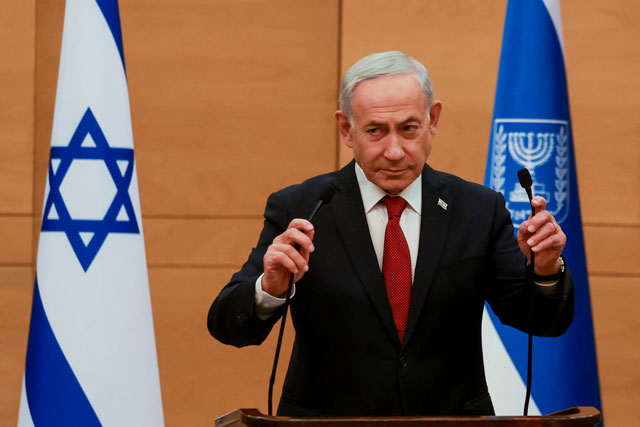
The offer comes after last month's inconclusive election left neither political bloc with a clear majority. Netanyahu's Likud party lost its governing majority, while Eisenkot has been working to assemble a coalition that could end Netanyahu's long tenure.
Israeli President Isaac Herzog tasked Eisenkot with forming the next government. His mandate expires on December 6, although he can seek a one-time 14-day extension.
Eisenkot said he was willing to test Netanyahu's commitment to genuine unity and invited him for accelerated negotiations. He also said that Likud had failed to respond to a detailed proposal on policy and governing principles submitted earlier.
The proposal has exposed differences within Eisenkot's potential coalition. Former prime minister Naftali Bennett has supported exploring negotiations with Netanyahu, but Yair Lapid and Democrats party leader Yair Golan have rejected the offer, describing it as a political manoeuvre intended to prevent the formation of a government without Likud.
Yisrael Beytenu leader Avigdor Liberman has also expressed scepticism, warning that the proposal could be an attempt to derail efforts to replace Netanyahu.
Eisenkot has already made coalition agreements with Yisrael Beytenu and the Democrats. However, forming a majority in the 120-member Knesset remains challenging, with negotiations involving other political groups continuing.
The outcome of Sunday's meeting could prove crucial to Eisenkot's efforts to form a government before the deadline and Netanyahu's attempt to remain part of Israel's next administration.