Daijiworld Media Network - Chandigarh
Chandigarh, Dec 31: The Punjab Assembly on Tuesday unanimously passed a resolution opposing the Centre’s move to replace the Mahatma Gandhi National Rural Employment Guarantee Act (MGNREGA) with the Viksit Bharat—Guarantee for Rozgar and Ajeevika Mission (Gramin), alleging that the new law undermines a legally guaranteed right to work and shifts the financial burden onto states.
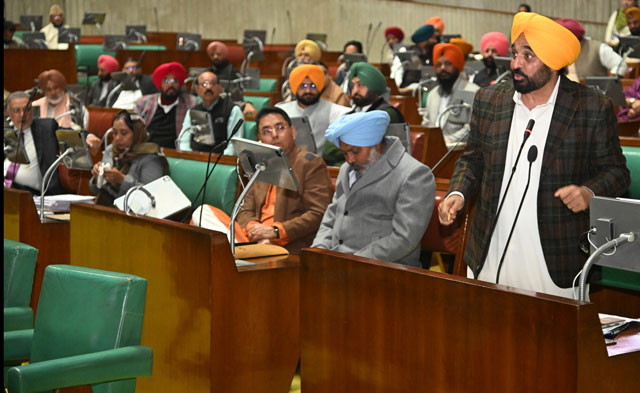
The resolution was moved by Rural Development and Panchayats Minister Tarunpreet Singh Sond during a special session of the Assembly. It stated that the proposed law weakens guaranteed wages and employment for poor labourers, women and lakhs of job card holders by turning a demand-driven scheme into a norm-based programme dependent on budgetary allocations and fixed plans.
Reacting sharply, Union agriculture and rural development minister Shivraj Singh Chouhan said the special session itself was against the federal spirit of the Constitution. Speaking in Bhopal, he said it was inappropriate for a state legislature to move against a law passed by Parliament and accused opposition parties of indulging in “blind politics.” Chouhan also alleged large-scale corruption in Punjab’s MGNREGA implementation, claiming social audits had exposed several irregularities without corrective action.
Explaining the resolution, Sond said the National Rural Employment Guarantee Act was passed in September 2005 and implemented in Punjab in 2008-09, before being renamed MGNREGA in 2009. He said the Act ensured a mandatory 100 days of wage employment annually to rural households willing to undertake unskilled work. Although the new law promises 125 days of work, Sond argued that the guarantee would remain “only on paper” as employment would be driven by allocations rather than actual labour demand.
Chief Minister Bhagwant Singh Mann accused the Centre of weakening the scheme by rushing the legislation through Parliament within 14 hours. He alleged that the new law was an attempt to take away “food, jobs and dignity” from Dalits, women and the poorest families, and demanded its immediate rollback, calling it anti-Punjab and contrary to the vision of a ‘Viksit Bharat.’