Daijiworld Media Network - Tripoli
Tripoli, Feb 4: Saif al-Islam Gaddafi, son of former Libyan dictator Muammar Gaddafi and once widely viewed as his father’s heir apparent, was shot dead during a “direct confrontation” after four gunmen stormed his home, his political office confirmed on Tuesday.
The 53-year-old’s death was announced by the head of his political office, while his lawyer told AFP that a “four-man commando” unit carried out an assassination at his residence in Zintan, western Libya.
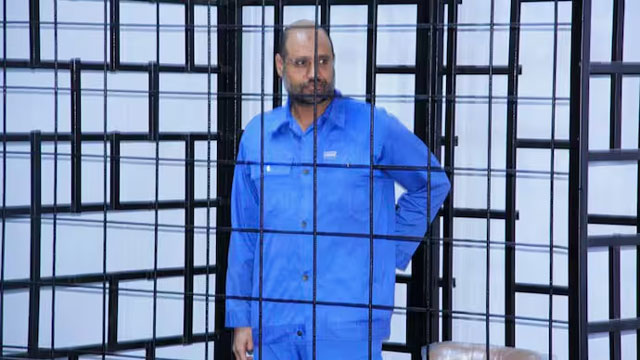
However, conflicting accounts have emerged, with Saif al-Islam’s sister telling Libyan television that he died near Libya’s border with Algeria.
Saif al-Islam’s life reflected Libya’s turbulent recent history. Once groomed as his father’s successor and regarded as one of the most influential figures in the oil-rich nation, he faded from public view after the 2011 uprising that ended Muammar Gaddafi’s four-decade rule.
Captured in 2011, he spent nearly a decade in captivity in a remote hill town before later re-emerging in national politics.
Following his release, Saif al-Islam launched a bid for the presidency — a move that added to Libya’s political uncertainty and complicated efforts to hold a unified national election.
Though he held no official government post, he was considered a key political player, capable of shaping alliances and influencing negotiations among rival factions.
Diplomatic role during Gaddafi era
During his earlier political career, Saif al-Islam played a prominent role in sensitive diplomatic efforts, including talks on Libya’s decision to abandon its weapons of mass destruction programmes.
He also negotiated compensation for families of victims of the 1988 Pan Am Flight 103 bombing over Lockerbie, Scotland.
At one point, he sought to project himself as a reformer, speaking publicly in favour of constitutional change and greater respect for human rights, as Libya attempted to re-enter the international mainstream.