Daijiworld Media Network - Manipal
Manipal, Mar 17: Researchers at the BRIC-Rajiv Gandhi Centre for Biotechnology and Manipal Academy of Higher Education (MAHE) have developed a breakthrough technology that allows scientists to watch cancer cells being destroyed by CAR-T cells in real time.
The team engineered a genetically encoded dual-biosensor that makes cancer cells glow with fluorescent proteins, revealing whether a cell dies a controlled, programmed death (apoptosis) or a messy, inflammatory one (necrosis). Their study, published in Biosensors and Bioelectronics, showed that CAR-T cells often kill in two phases: a quiet shutdown followed by a delayed explosive death.
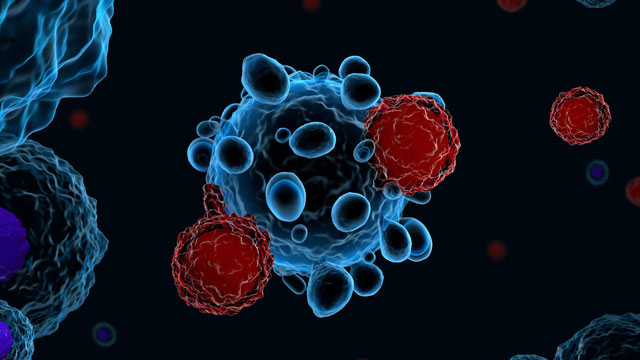
The platform uses two molecular sensors: RealCas3, which tracks apoptosis, and MitoDsRed, which monitors mitochondrial health to detect necrosis. Watching the two colours simultaneously provides a non-invasive, high-resolution view of cell death over 24 hours—an advance over older endpoint assays that required killing cells and often misclassified the type of death.
While the technology currently works best in laboratory-engineered cancer cell lines, it promises to help scientists design next-generation CAR-T therapies that are more effective against solid tumours and gentler on patients, potentially reducing dangerous immune overreactions such as cytokine storms.
This innovation offers a vital roadmap for understanding cancer cell behaviour and fine-tuning immunotherapies for better patient outcomes.