Daijiworld Media Network – Washington
Washington, Apr 21: The Supreme Court of the United States has agreed to hear a major case challenging a Colorado law that requires preschools receiving public funds to admit children of same-sex couples, setting the stage for a significant constitutional debate over religious freedom and LGBTQ rights.
The case centres on a 2020 Colorado ballot measure that created a universal preschool programme, allowing both public and private institutions to receive state funding. The law includes a non-discrimination clause mandating equal access for all children regardless of factors such as sexual orientation, gender identity, religion or race.
The legal challenge has been brought by two Catholic parishes and a family, who argue that the provision violates the First Amendment’s free exercise clause by forcing religious institutions to act against their beliefs. The petitioners are represented by Becket, a religious liberty legal group.
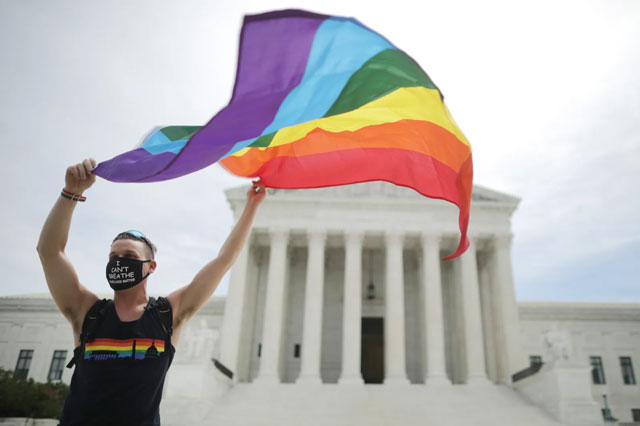
Referring to the landmark Obergefell v. Hodges ruling that legalised same-sex marriage, the petitioners argued that religious groups must be protected when their beliefs differ from prevailing norms on marriage and sexuality.
The case is expected to be heard later this year, with a verdict likely in 2027. It will test how far anti-discrimination laws can go when they conflict with religious doctrines—an issue the conservative-leaning 6-3 court has increasingly been asked to resolve.
In recent years, the court has ruled that when governments offer funding programmes for education, religious institutions cannot be excluded solely because of their faith. However, the current case raises the reverse question—whether religious schools can opt out of certain legal obligations tied to such funding.
The dispute also touches on a longstanding 1990 legal precedent that allows laws affecting religion to stand if they are “generally applicable.” The petitioners are seeking to overturn or limit that precedent, arguing that exceptions within the Colorado law—such as preferences for low-income or disabled children—undermine its neutrality.
Lower courts, including a federal district court and the 10th US Circuit Court of Appeals, had rejected these arguments, prompting the appeal to the Supreme Court.
Meanwhile, the court declined to hear a separate case from Massachusetts involving parental rights over a child’s gender identity at school. The case involved a couple who alleged that their child was treated as genderqueer by school authorities without their consent.
While the court did not take up that case, it has recently addressed similar issues. In one ruling, it sided with religious parents seeking to exempt their children from exposure to LGBTQ-themed material in schools, highlighting the ongoing legal tension between parental rights, religious beliefs and anti-discrimination protections.
The Colorado case is expected to have wide-ranging implications, potentially reshaping the balance between religious liberty and LGBTQ rights across the United States.