Daijiworld Media Network - New Delhi
New Delhi, May 3: Delhi Chief Minister Rekha Gupta on Sunday announced a major expansion of the capital’s metro network, with plans to add 97 km of connectivity through seven new corridors and 65 stations.
Speaking at the 32nd Foundation Day of the Delhi Metro Rail Corporation, Gupta said the project, part of Metro Phase-V (B), is estimated to cost around Rs 48,204.56 crore and aims to improve connectivity to developing and peripheral areas of the city.
She said four priority corridors are targeted for completion by 2029.
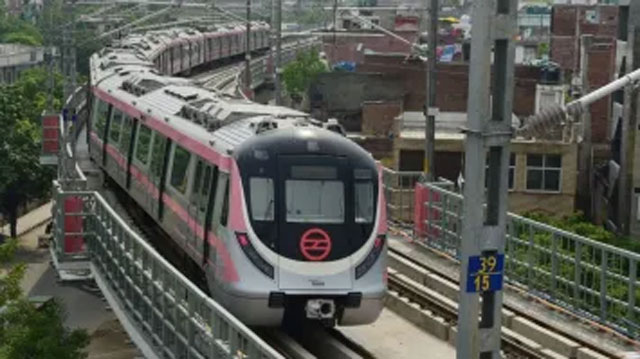
The first corridor will run from Dhansa Bus Stand in Najafgarh to Nangloi, covering 11.859 km with nine elevated stations. It will provide interchange facilities at Nangloi (Green Line) and Dhansa Bus Stand (Grey Line).
The second corridor will connect Central Secretariat to Kishangarh over 15.969 km, with a major portion of 13.731 km underground. It will include 10 stations, nine of which will be underground.
The third corridor involves the extension of Line-2 from Samaypur Badli to Narela DDA Sports Complex, spanning 12.89 km with eight elevated stations.
The fourth corridor will extend Line-5 from Kirti Nagar to Palam, covering 9.967 km.
Another key corridor from Jor Bagh to Mithapur will span 16.991 km, linking areas such as Lodhi Colony, Old Ishwar Nagar, Ali Village, Jaitpur, Moladband and Mithapur. It will offer multiple interchange points, including Jor Bagh (Yellow Line), Lajpat Nagar (Violet and Pink lines), NSIC Okhla (Magenta Line), Jasola Apollo (Violet Line) and Madanpur Khadar.
The sixth corridor will run from Shastri Park to Mayur Vihar Phase III, covering 13.197 km, including an 8.99 km underground stretch. It will pass through areas like New Kondli, Patparganj, Geeta Colony, Gandhi Nagar market and Kailash Nagar, with interchanges at Shastri Park (Red Line), Nirman Vihar (Blue Line) and Trilokpuri (Pink Line).
The final corridor will connect key northern and northwestern localities including West Shalimar Bagh, East Pitampura, Rohini Sector 16, Delhi Technological University and Rohini Sector 29, with interchange facilities at Keshavpuram, North Pitampura and Rohini Sector 34.
The chief minister has directed the DMRC to prepare and submit revised detailed project reports (DPRs) for both priority and non-priority corridors.
The expansion is expected to significantly boost urban mobility and ease congestion, while strengthening last-mile connectivity across the national capital.