Daijiworld Media Network - New Delhi
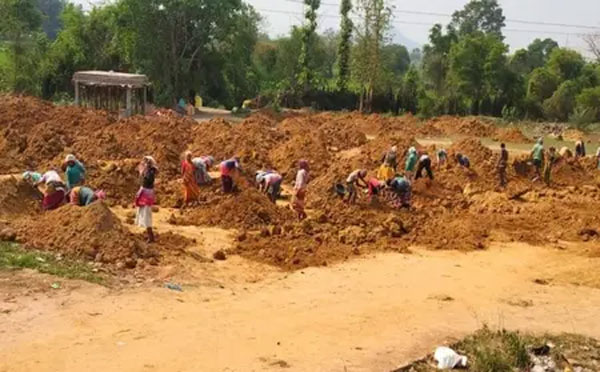
New Delhi, May 4: The Central Government has released over Rs 17,744 crore as the first instalment for wage payments under the Mahatma Gandhi National Rural Employment Guarantee Act for the financial year 2026–27, a senior official confirmed.
The funds have been disbursed through Direct Benefit Transfer (DBT) directly into workers’ bank accounts to ensure transparency and reduce delays in wage payments.
For FY27, the government has allocated Rs 30,000 crore to MGNREGA, primarily aimed at clearing pending dues ahead of a planned transition to a new rural employment framework called VB-GRAMIN, which carries a proposed budget of Rs 95,692 crore.
Officials said the new initiative, also referred to as Viksit Bharat – G RAM G, is being positioned as an upgraded version of MGNREGA, offering 125 days of guaranteed employment, higher wages, unemployment allowance, and legal safeguards, including compensation for delayed payments.
A senior official stated that the programme is designed to balance the needs of farmers and rural workers while strengthening employment security in rural areas.
Earlier data shows that by March 11, 2026, more than Rs 81,500 crore had already been released for FY 2025–26, including Rs 65,875 crore for wages and Rs 15,627 crore for material and administrative expenses.
Despite a slight monthly dip in early FY27, employment demand remains strong, with 43 crore person-days approved for May 2026, compared to 30 crore person-days in April.
The government highlighted that over the past decade (2014–2025), more than Rs 7.81 lakh crore has been spent under MGNREGA, resulting in the creation of over 8.07 crore rural assets, significantly higher than the previous decade.
Annual allocations have also risen sharply—from Rs 1,660 crore in 2013–14 to Rs 86,000 crore in 2025–26, reflecting expanded coverage and demand.
The scheme continues to focus on agriculture-related work, natural resource management, and rural infrastructure development. Key projects include check dams, farm ponds, irrigation wells, and community water structures.
Officials also noted that water conservation efforts under the programme have helped reduce water-stressed rural blocks by 35% over the past decade.
Additionally, the Mission Amrit Sarovar initiative has led to the creation of over 68,000 water bodies in its first phase, with Phase II now underway, emphasising community participation in water conservation efforts.