Daijiworld Media Network – Mumbai
Mumbai, May 28: Recurring body pain is no longer limited to older adults or people engaged in physically demanding work, as increasing numbers of young professionals in their 20s and 30s are now experiencing neck strain, lower back pain, shoulder stiffness and wrist discomfort due to modern work habits.
Health experts say prolonged sitting, poor posture and excessive screen exposure are among the key reasons behind the growing trend. According to Surya Maguluri, health expert and co-founder of CURAPOD, sedentary work culture has placed constant pressure on the spine, muscles and joints, leading to persistent aches, fatigue and reduced flexibility among working professionals.
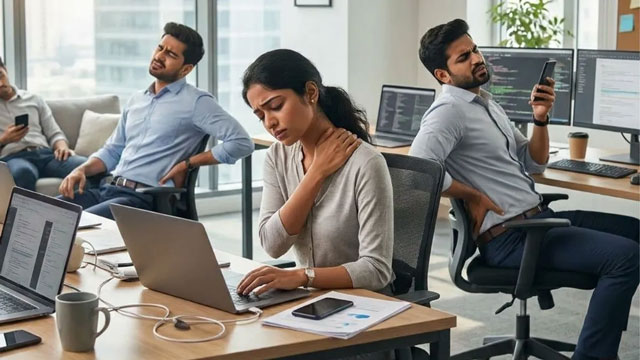
Experts point out that the rise of remote and hybrid work has worsened the issue, with many employees working from beds, couches and unsuitable workstations that fail to provide proper ergonomic support. Improper seating positions, incorrect screen levels and long hours on laptops are contributing to chronic musculoskeletal stress.
Mental stress and digital overload are also emerging as major factors behind physical discomfort. Constant notifications, tight deadlines and extended screen dependency often result in shoulder tension, headaches, jaw pain and overall body fatigue.
Health experts warn that many individuals tend to ignore early signs of pain and continue working until the discomfort begins affecting productivity and mobility. While painkillers and ointments may offer temporary relief, specialists stress the importance of structured recovery methods including stretching, mobility exercises, posture correction and ergonomic workplace practices.
The growing awareness around preventive wellness has also increased interest in recovery-focused initiatives such as strength training, stretching routines and wearable pain-relief technologies using red and near-infrared light therapy.
Experts believe that as workplaces become increasingly digital, physical recovery and mobility management will play a much bigger role in employee wellness and long-term health.