Daijiworld Media Network - Tehran
Tehran, Jun 6: Regional tensions escalated sharply on Saturday after Iran's Islamic Revolutionary Guard Corps (IRGC) claimed it had launched missile attacks on US military facilities in Kuwait and Bahrain in retaliation for American strikes on targets in southern Iran.
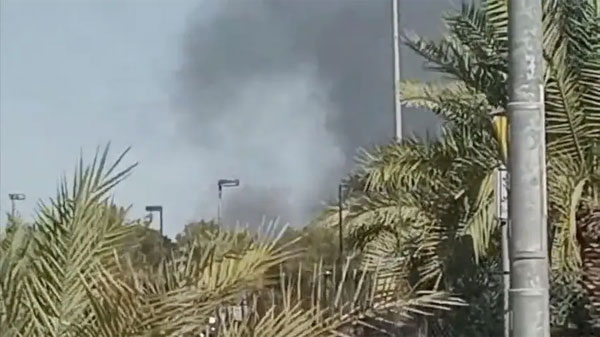
In a statement carried by its official outlet, the IRGC said its forces targeted the Ali Al Salem Air Base in Kuwait and facilities linked to the US Navy’s Fifth Fleet headquarters in Bahrain. The Iranian military described the strikes as a direct response to alleged US attacks on communication infrastructure in Qeshm Island and Sirik County.
According to the IRGC, the confrontation began when four oil tankers attempted to transit the Strait of Hormuz without coordinating with Iranian authorities. Tehran claimed one vessel was targeted after ignoring repeated warnings, while the remaining ships turned back.
Iran further alleged that US drones later struck communication towers in Qeshm Island and Sirik, prompting an immediate retaliatory response from the IRGC's aerospace division.
Meanwhile, the US Central Command (CENTCOM) confirmed that American forces had carried out strikes on Iranian radar and surveillance sites after intercepting what it described as Iranian drone threats in the Strait of Hormuz. US officials said defensive measures were taken to protect regional maritime traffic and military assets.
Kuwait's armed forces reported that its air defence systems intercepted incoming missiles and drones, adding that explosions heard across parts of the country were caused by defensive operations against hostile targets. Authorities urged residents to follow official safety instructions.
The latest exchange follows days of heightened military activity in the Gulf. Earlier this week, Kuwait accused Iran of launching missiles and drones that caused casualties and damage to infrastructure, including disruptions at Kuwait International Airport.
The Strait of Hormuz remains a focal point of the standoff. Iran has tightened restrictions on maritime traffic linked to the United States and Israel, while Washington has maintained naval pressure in the region. The waterway, a critical route for global energy supplies, has become increasingly volatile amid the ongoing confrontation.
While Iran claimed its missiles struck US targets, American officials said most of the projectiles were intercepted and denied reports of significant damage to US military installations.
The latest military exchange has further strained efforts to preserve a fragile ceasefire and has raised concerns about the possibility of a wider conflict in the Gulf region.