Daijiworld Media Network - Chicago
Chicago, Jun 14: A new study presented at the annual meeting of the Endocrine Society has found the presence of endocrine-disrupting chemicals (EDCs) in breast milk and infant urine, raising concerns about early-life exposure to environmental contaminants.
The findings were presented at ENDO 2026, the society's annual conference held in Chicago, where researchers examined the exposure of infants to a range of chemicals commonly found in food packaging, personal care products and household items.
Despite the findings, researchers stressed that breast milk remains the optimal source of nutrition for infants and continues to provide vital health benefits.
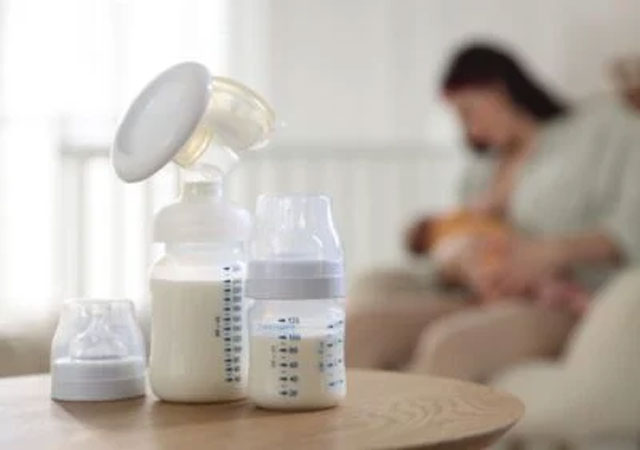
"Breast milk is the optimal nutritional source for any child and must be protected, as it is a vehicle of environmental contaminants," said Maria Elisabeth Street, associate professor and director of the Division of Paediatric Endocrinology at the University of Parma and University Hospital of Parma in Italy.
The study analysed data from 336 mother-infant pairs enrolled in the LIFE-MILCH project. Researchers collected breast milk and urine samples at one, three and six months after birth and tested them for more than 50 chemicals, including bisphenols, phthalates, parabens, pesticides and polycyclic aromatic hydrocarbons.
Among the most commonly detected substances was Bisphenol A (BPA), a chemical widely used in plastics and food packaging. BPA was found in 51.2 per cent of breast milk samples one month after birth and in 49.8 per cent of samples six months later.
The chemical was also detected in nearly one-third of infant urine samples shortly after birth, with the proportion rising to 67.6 per cent by six months of age.
Researchers also identified Bisphenol S (BPS), often used as a replacement for BPA, in breast milk and infant urine. Detection rates increased over time, indicating continued exposure during infancy.
Parabens, including methylparaben and ethylparaben, were among the most frequently detected chemicals in breast milk samples. Their presence was also found to increase in infant urine over the six-month study period.
The study further identified traces of glufosinate, a herbicide, as well as various phthalates, despite growing claims that many consumer products are now phthalate-free.
Notably, dibutyl phthalate (DBP) was detected in over 90 per cent of breast milk samples one month after childbirth and remained prevalent six months later. Detection rates in infant urine rose significantly during the same period.
According to the researchers, most of the chemicals found in breast milk and infant urine appeared to be linked to dietary habits and the use of personal care and household products.
The study warned that exposure to endocrine-disrupting chemicals during infancy may be associated with long-term health effects, including neurodevelopmental disorders, hormonal disturbances and alterations in reproductive development.
Researchers also noted that such exposure could influence growth patterns, body weight regulation and the risk of obesity later in life.
While the findings highlight the widespread presence of environmental contaminants, experts reiterated that the benefits of breastfeeding continue to outweigh the potential risks and emphasised the need for stronger measures to reduce chemical exposure in everyday environments.