Daijiworld Media Network – Geneva
Geneva, Jun 18: The World Health Organization (WHO) has released updated Guidelines for Drinking-Water Quality, offering revised global standards aimed at helping countries strengthen public health protection through safer water systems.
Despite global progress, the WHO said the challenge remains severe, with an estimated 2.1 billion people still lacking safely managed drinking-water services. Of these, around 106 million people continue to rely directly on surface water sources such as rivers and lakes.
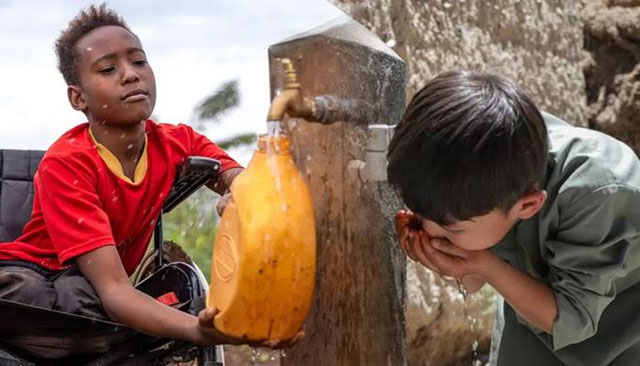
The updated guidelines are intended to provide governments with a stronger scientific and regulatory framework to improve water quality standards, surveillance systems and risk management practices.
WHO officials said safe drinking-water is essential to health, development and human rights. The organisation stressed that the new guidance focuses on preventing contamination and managing risks before they turn into public health threats.
The revised edition incorporates new scientific evidence, implementation experience from countries, and lessons learned from risk-based approaches already in use across various regions. It places strong emphasis on proactive water safety planning, particularly for small water supply systems.
The framework outlined in the guidelines is based on three key components — setting health-based targets, implementing risk management through water safety planning, and ensuring independent surveillance to verify compliance and effectiveness.
Microbial contamination remains the most significant global risk to drinking-water safety. The updated guidelines strengthen recommendations on managing waterborne pathogens and highlight risks in sensitive settings such as healthcare facilities.
The document also updates guidance on chemical hazards, including pesticides used in vector control programmes, reflecting the latest WHO evidence and safety standards.
WHO noted that this updated edition consolidates previous versions and addenda, forming a comprehensive fourth edition of the guidelines, which supersedes earlier publications.
Looking ahead, the organisation has announced plans for a fifth edition of the guidelines, which will include further evidence reviews on emerging contaminants such as PFAS chemicals and disinfection by-products.
The WHO said the new guidelines will be supported by technical briefings, webinars and country-level tools to help governments adopt safer drinking-water policies and strengthen implementation on the ground.