Daijiworld Media Network – Washington
Washington, Jun 27: The United States carried out strikes on Iran on Friday after a drone attack on a cargo ship in the Strait of Hormuz, marking the biggest challenge so far to a temporary understanding reached between Washington and Tehran to work towards ending their months-long conflict and reopening the crucial waterway.
US President Donald Trump said the drone attack had violated the ceasefire arrangement. The strikes were launched shortly after Trump told reporters, “You’ll find out,” when asked whether the US would respond.
The US Central Command said American forces targeted missile and drone facilities as well as coastal radar locations in Iran.
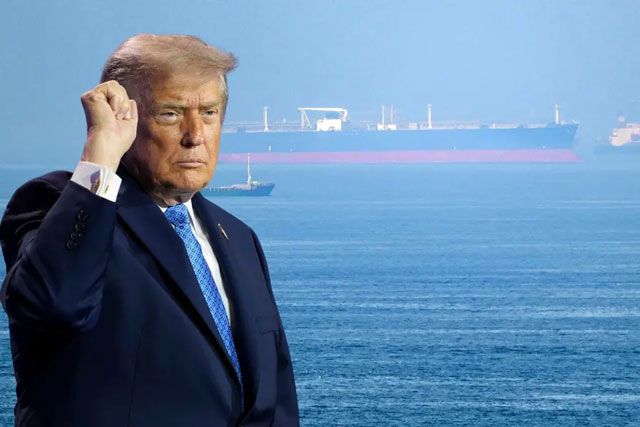
“I don’t like the fact that they took a shot yesterday, actually four of them,” Trump said at the White House shortly before the strikes. When questioned about the action despite his earlier remarks that talks with Tehran were progressing well, Trump said Iran was “a little bit different” before ending the interaction with reporters.
Iranian Parliament National Security Commission head Ebrahim Azizi responded on social media, saying, “The Strait of Hormuz is governed by Iran, so: Respect the rules,” while warning against confusing control with escalation.
“This is not a violation of the ceasefire; it is ceasefire management,” Azizi said.
US strikes lasted about an hour
The US military operation ended about an hour after the US Central Command announced the strikes, according to a US official familiar with the matter.
The official, speaking on condition of anonymity, said the operation was ongoing at the time.
The British military had earlier reported that a container ship was hit by a projectile off Oman’s coast on Thursday, hours after Iran warned vessels against using the route. The United Kingdom Maritime Trade Operations centre said there were no reported injuries.
The incident came at a sensitive time as the US and Iran continue negotiations for a long-term agreement. A major point of discussion remains the movement of ships through the Strait of Hormuz and Iran’s stockpile of highly enriched uranium.
Under the interim understanding, both sides have 60 days to finalise the details of a broader agreement.
Shipping activity hit by fresh tensions
The drone strike has affected efforts to restore shipping movement through the Strait of Hormuz, where vessels had started leaving after being stranded during the conflict.
Marine data company Windward said the incident was the first major test to growing commercial confidence in the waterway. While the strait remains open, the pace of normal shipping activity has slowed.
On Wednesday, 78 vessels crossed the strait, the highest number since the war began, though still below pre-war levels of more than 130 ships a day.
According to Lloyd’s List Intelligence, at least two tankers changed course while attempting to use a UN-backed alternative route near Oman after Iran insisted ships follow Tehran-approved routes.
More than two dozen vessels were still using the southern route of the strait after the attack.
The International Maritime Organisation suspended an operation to move stranded ships through the alternative route and said it would not resume until safety guarantees were provided.
Around 115 ships have moved out of the strait in recent days, while nearly 500 remain in the area, according to IMO Secretary-General Arsenio Dominguez.
Israel-Lebanon announce step towards peace
Meanwhile, ambassadors from Israel and Lebanon announced a framework agreement on Friday, describing it as a step towards peace after months of fighting between Israeli forces and Hezbollah.
Lebanon’s Ambassador to the US Nada Hamadeh said the agreement would help people return to their homes and allow Lebanese citizens to live in peace and security.
Israeli Prime Minister Benjamin Netanyahu called the development a “great achievement” for Israel, while insisting that Israeli forces would remain in southern Lebanon’s security zone until Hezbollah is disarmed and no longer poses a threat.