Daijiworld Media Network - Kolkata
Kolkata, July 11: Even as the Indian Navy strengthened its fleet with the induction of its sixth advanced stealth frigate on Saturday, uncertainty surrounds key elements of its long-term modernisation programme aimed at expanding the force to 200 warships by 2035.
One of the major proposals awaiting clearance is the acquisition of eight Next Generation Corvettes (NGCs) under Project 28A. Although the bidding process has been completed, the project is yet to receive approval from the Cabinet Committee on Security (CCS).
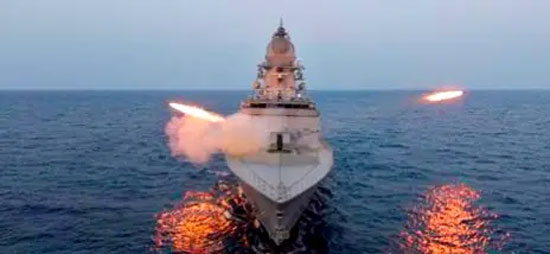
According to sources, the proposal has come under scrutiny amid questions over the operational need for additional missile corvettes when the Navy is simultaneously inducting advanced stealth frigates with comparable surface-to-surface and surface-to-air missile capabilities.
Strategic experts believe the Navy may instead need to prioritise platforms designed for anti-submarine warfare, particularly in view of China's growing naval presence in the Indian Ocean and its support for Pakistan's submarine modernisation programme.
China is assisting Pakistan in the construction of eight advanced diesel-electric submarines equipped with Air Independent Propulsion (AIP) technology, with the first vessel already delivered. Defence analysts believe the deployment of the remaining submarines in the Arabian Sea and the Bay of Bengal could significantly alter the regional maritime security environment.
The Indian Navy currently operates four Kamorta-class anti-submarine warfare corvettes and is in the process of inducting 16 Anti-Submarine Warfare Shallow Water Craft. While these smaller vessels are primarily intended for coastal defence and the protection of harbours and island territories, experts argue that India requires more large anti-submarine platforms capable of operating effectively in deeper waters.
Chinese submarines have been regularly operating in the Bay of Bengal in recent years, increasing concerns about underwater surveillance and maritime security.
Defence observers say that if the Navy intends to revise its acquisition priorities, it would be prudent to do so now, as major warship construction projects typically require several years before deliveries begin.
At present, the latest major contract awarded by the Navy is for 11 Next Generation Offshore Patrol Vessels (NGOPVs), approved in March 2023. Seven of these vessels are being built by Goa Shipyard Limited, while the remaining four are under construction at Garden Reach Shipbuilders and Engineers Limited (GRSE) in Kolkata. The first deliveries are expected within the next two to three years.
Beyond the NGC programme, the Navy is also planning to procure Next Generation Destroyers (NGDs), an estimated Rs 80,000-crore project intended to replace the Visakhapatnam-class destroyers with more advanced stealth warships.
The service is simultaneously pursuing Project 75(I), under which next-generation conventional submarines equipped with Air Independent Propulsion systems are expected to begin joining the fleet around 2033.
Another major proposal under consideration is the Project-17 Bravo (P-17B) programme, a Rs 70,000-crore initiative to build next-generation stealth frigates featuring integrated electric propulsion, improved structural stealth and enhanced vertical missile launch systems.
In addition, the Union government has granted initial approval for the acquisition of four 32,000-tonne Landing Platform Docks (LPDs), which are expected to significantly enhance the Navy's amphibious warfare and humanitarian assistance capabilities.
Together, these projects form the backbone of the Navy's long-term modernisation strategy, although several key procurement decisions remain pending government approval.