Daijiworld Media Network - Gandhinagar
Gandhinagar, Aug 5: Gujarat has intensified its public health response following heavy monsoon rains, deploying thousands of surveillance and emergency response teams while providing medical care to more than 1.74 lakh people through health camps to prevent disease outbreaks in flood-affected areas.
The Health Department said a comprehensive Monsoon Action Plan was implemented across all 34 districts and eight municipal corporations before and during the monsoon, enabling authorities to respond swiftly to flooding and related health risks.
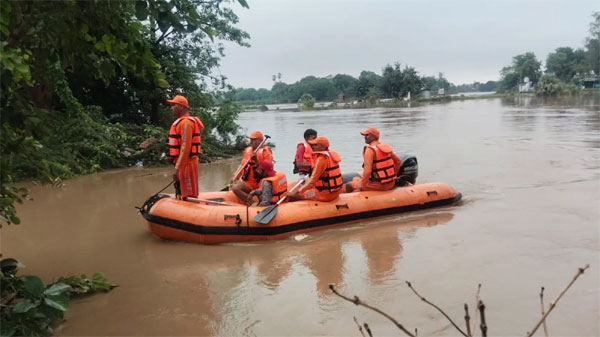
According to the state government, no major public health emergency has been reported so far, with disease outbreaks remaining largely under control despite widespread flooding.
Round-the-clock health control rooms have been activated at the state level, in all districts and across the eight municipal corporations. Rapid Response Teams are operational at the state, district and taluka levels, while each district has been provided with five additional Emergency Medical Teams supported by dedicated vehicles and personnel.
Special attention has been given to vulnerable groups. A total of 675 pregnant women from flood-affected areas were shifted to healthcare facilities in advance, where 272 institutional deliveries were conducted. Regular health check-ups are also being carried out for people staying in relief camps.
Emergency medical services have been strengthened with 1,496 ambulances under the 108 Emergency Service and 816 ambulances attached to Primary Health Centres and Community Health Centres kept on standby. Health centres have also been equipped with generators and adequate diesel supplies to ensure uninterrupted services during power outages.
To prevent post-flood diseases, the department organised 6,868 medical camps where over 1.74 lakh people underwent health check-ups and received treatment.
More than 18,000 surveillance teams have been conducting daily door-to-door visits in affected areas, distributing over 1.05 crore chlorine tablets and more than 10.29 lakh Oral Rehydration Solution (ORS) packets.
Officials said over 10.52 lakh residual chlorine tests have been carried out to ensure safe drinking water, while more than 3,061 drinking water pipeline leakages have been repaired on priority.
The department has stocked healthcare facilities with over 1.5 crore chlorine tablets, more than 60 lakh ORS packets and 1,38,234 anti-snake venom injections. Anti-snake venom has also been made available in 108 ambulances for prompt treatment of snakebite cases during the monsoon.
As a preventive measure against leptospirosis after floodwaters receded, more than 7.61 lakh high-risk residents in 562 villages across Valsad, Surat, Navsari and Tapi districts have been administered doxycycline.
The state has also deployed 497 additional vector control teams to carry out anti-larval operations and awareness campaigns to curb mosquito-borne diseases. The first round of Indoor Residual Spraying has been completed in 106 high-risk villages, while the second phase began on August 1.
In addition, larvivorous Gambusia fish have been released into 4,998 permanent water bodies to help control mosquito breeding.
Health officials said awareness campaigns are continuing through ASHA workers and vector control teams to educate people on preventing monsoon-related diseases while maintaining preparedness for any further health emergencies during the ongoing rainy season.