Daijiworld Media Network - New Delhi
New Delhi, Aug 19: Union Road Transport and Highways Minister Nitin Gadkari on Wednesday blamed consultants preparing defective detailed project reports (DPRs) for contributing to highway accidents and fatalities, while warning contractors of strict action, including blacklisting, for compromising construction quality.
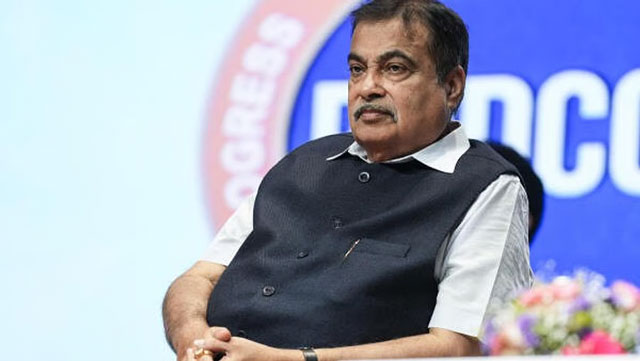
Addressing the fourth edition of the FICCI Tunnels & Bridges Conference 2026 in New Delhi, Gadkari alleged that some consultants prepare DPRs using Google without proper ground-level assessment, resulting in defective planning and loss of lives and property.
“Such poor-quality DPRs mean that today on roads, 5 lakh accidents occur, and 1.8 lakh deaths, and all have the problem of defective DPRs,” he said.
Gadkari's remarks come amid reports that his ministry is preparing tunnel tenders worth between Rs 2 lakh crore and Rs 2.5 lakh crore. He stressed that contractors awarded major infrastructure projects must not compromise on construction quality.
The minister said performance audits would be conducted in addition to financial audits and warned that contractors found lacking would face punishment and possible blacklisting. Ratings would also be assigned to contractors and DPR consultants, with these ratings determining their eligibility for future bids.
Gadkari said the ministry would review existing provisions governing the subcontracting of highway works to ensure that contractual requirements are strictly followed. He stressed that responsibility for quality and timely completion should remain clearly with the principal contractor.
He noted that defective planning and poor-quality construction could result in significant economic losses as well as loss of life in road accidents.
Encouraging the infrastructure industry to strengthen domestic capabilities, Gadkari called for greater manufacturing of tunnel boring machines in India, identifying their high capital cost as a major constraint. He also called for a technical session on ultra-high performance concrete.
Speaking at the conference, S Paramasivan, chair of the FICCI Committee on Roads & Highways and managing director of Afcons Infrastructure, highlighted four major concerns facing the industry.
He said the widespread use of the L1, or lowest-bid, system was resulting in tenders being awarded at prices 20 per cent or more below the estimated project cost, putting commercial viability and execution quality under pressure.
Paramasivan noted that quality-cum-cost based selection provisions already exist with the Finance Ministry and the Ministry of Road Transport and Highways, but are rarely used.
He urged the government to make the quality-cum-cost based selection method the preferred approach for complex infrastructure projects and projects valued above Rs 1,000 crore, with technical parameters accounting for 70 to 80 per cent of the evaluation.