Daijiworld Media Network - Cairo
Cairo, Aug 23: Egyptian Foreign Minister Badr Abdelatty and his Iranian counterpart Seyed Abbas Araghchi discussed the latest regional developments and diplomatic efforts to de-escalate tensions during a phone call, the Egyptian Foreign Ministry said.
The two ministers discussed efforts to create conditions for a return to diplomacy, including implementation of a memorandum of understanding (MoU) signed between the United States and Iran on June 18, according to a ministry statement issued on Saturday.
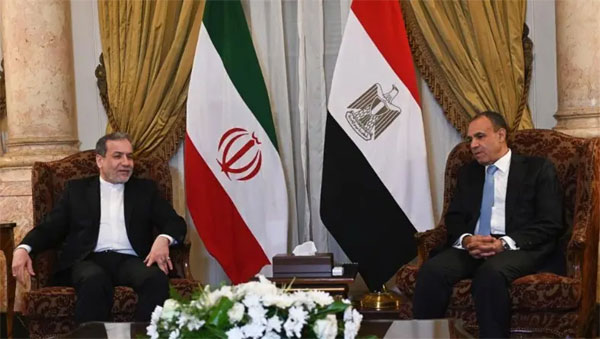
Abdelatty stressed the need to intensify diplomatic efforts to contain the escalation and reach peaceful understandings that could restore security and stability in the region, reports Xinhua news agency.
He also underlined the importance of ensuring the freedom and safety of international navigation and respecting the security and stability of the Gulf states in a manner that serves the interests of people across the region.
Araghchi briefed Abdelatty on Iran's assessment of recent developments, the progress of negotiations and the challenges facing the diplomatic process, according to the statement.
US-Iran talks remain uncertain
Under the US-Iran MoU, the two sides were scheduled to hold negotiations within 60 days to reach a final agreement. The deadline expired on Monday, but the future of the talks remains uncertain amid renewed tensions over the Strait of Hormuz.
US President Donald Trump said on Wednesday that Washington would launch "the most crushing economic operation ever taken" against Iran.
Meanwhile, Iranian Parliament Speaker Mohammad Baqer Qalibaf said Tehran had received "numerous" messages from neighbouring countries regarding the possibility of developing new regional security arrangements and economic cooperation.
In a post on social media platform X on Saturday, Qalibaf accused the United States of putting the security of its allies at risk through what he described as bullying and disregard for their interests in favour of Israel.
He argued that an independent, homegrown regional order would be the way to deliver peace and security.
Tensions over Strait of Hormuz
The United States and Israel launched joint airstrikes on Iran on February 28. Tehran responded with missile and drone attacks targeting Israel and US military bases in countries across the region, according to Xinhua.
Regional officials cited in media reports said Gulf Arab countries were frustrated with Washington over its decision to initiate the conflict while failing to adequately protect them.
The latest Egypt-Iran diplomatic contact comes amid continuing efforts to prevent further escalation and revive negotiations between Washington and Tehran.