Daijiworld Media Network - New Delhi
New Delhi, Oct 16: India will need an additional 2.6 billion square feet of healthcare real estate by 2035, along with nearly 2.9 million additional hospital beds, to bring its healthcare infrastructure closer to global benchmarks, according to a report released by CBRE South Asia on Friday.
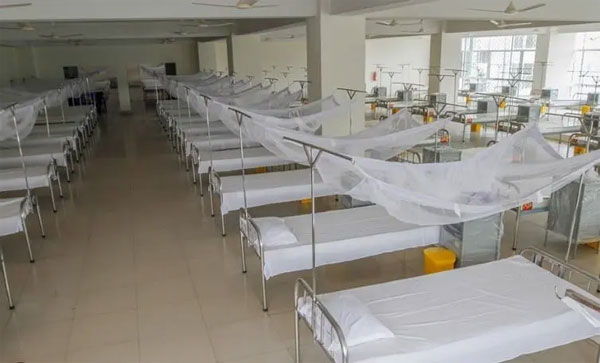
The report said India currently has around 1.6 hospital beds per 1,000 people, significantly below the global average of 3.3 beds per 1,000 people. To bridge this gap, the country's total healthcare real estate footprint will need to expand substantially from an estimated 2.1 billion square feet in 2025.
“The requirement presents a significant opportunity for developers, investors and healthcare operators to create purpose-built and scalable healthcare assets across markets,” the report said.
Healthcare investment is increasingly shifting towards specialised facilities, day-care formats and acquisition-led expansion, reflecting changing demand and the need to expand capacity across the country.
Southern states, including Andhra Pradesh, Telangana, Tamil Nadu, Kerala and Karnataka, have relatively higher levels of existing healthcare infrastructure in relation to their burden of non-communicable diseases (NCDs).
In contrast, Chhattisgarh, Odisha, Madhya Pradesh and Jharkhand have lower hospital bed density relative to their NCD burden, highlighting the need for additional healthcare infrastructure in these states.
Karnataka, Kerala, Tamil Nadu and Telangana, meanwhile, have stronger healthcare infrastructure and higher household incomes, supporting further expansion of specialised healthcare facilities and medical ecosystems.
“Healthcare is emerging as one of India’s most consequential real estate opportunities, not simply because demand for care is increasing, but because the country needs a far deeper and more distributed physical healthcare network,” said Anshuman Magazine, Chairman and CEO for India, South-East Asia, the Middle East and Africa at CBRE.
He said built-to-suit (BTS) structures could play an important role in meeting this requirement by providing healthcare operators with specialised, purpose-built clinical infrastructure tailored to their operational and regulatory needs.
Such arrangements would enable healthcare providers to direct more capital towards clinical services, medical equipment and technology, while offering property owners greater income visibility through long-term leases, he added.
Beyond conventional hospitals, the sector is also witnessing the growth of diagnostic centres, day-care surgery facilities, wellness and preventive healthcare formats. These include health screening centres, rehabilitation clinics, eye-care centres, in-vitro fertilisation (IVF) centres and vaccination facilities, particularly in urban areas.
The report also noted that, given the highly competitive healthcare landscape in certain cities, operators are increasingly evaluating the acquisition of existing hospitals to enter established markets more quickly by leveraging their operational infrastructure, licences and patient networks.