Daijiworld Media Network - Jerusalem
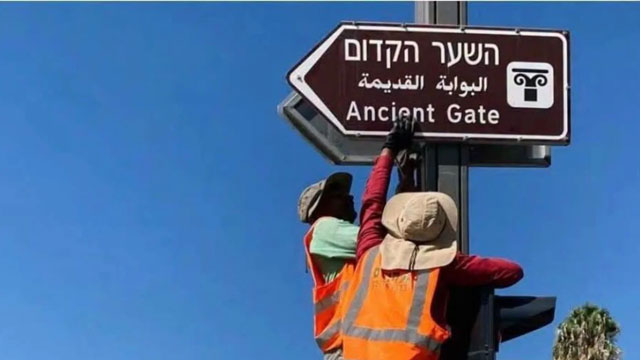
Jerusalem, Aug 27: Israeli authorities have replaced public signs reading “Damascus Gate” with “Ancient Gate” in occupied East Jerusalem, drawing criticism from Palestinian officials and activists who described the move as another attempt to alter the city's historical and Palestinian identity.
Damascus Gate, located on the northern side of Jerusalem's Old City, is one of the most prominent entrances through the ancient city walls. It is also a major route used by Palestinians travelling to Al-Aqsa Mosque and an important social gathering point.
Earlier this week, signs bearing the name Damascus Gate were removed and replaced with signs reading “Ancient Gate” in Arabic, English and Hebrew.
Abdullah Marouf, a researcher specialising in Al-Aqsa Mosque affairs, accused Israel of seeking to Judaise Jerusalem by replacing Arabic and Islamic references in public life with Jewish ones.
He said the area surrounding Damascus Gate is an important part of Palestinians' daily life and that attempts to change its name have been made previously.
“This Hebrew name aims to strip the place of its ‘Damascus Gate’ designation, as it is one of the main and central gates of Jerusalem,” Marouf told Middle East Eye.
Marouf said efforts to rename landmarks in the area were not new. Israel had previously renamed Solomon's Cave, located between Damascus Gate and Herod's Gate, as “Zedekiah's Cave”.
According to Marouf, such changes are intended to alter the historical character and identity of Jerusalem. He said the city's Arabic language, character and heritage remain evident despite attempts to change names on public signs.
The latest move comes amid what Palestinian authorities describe as a wider campaign targeting street names, landmarks and historical sites across Jerusalem.
The Jerusalem Governorate said Israeli authorities were replacing long-standing Arabic names as part of a policy aimed at reshaping the city's urban and cultural landscape.
In a statement on Wednesday, the governorate said the changes were not merely administrative measures but part of a broader effort to disconnect future generations from Jerusalem's historical Arabic names.
“The names of Jerusalem's gates, streets and landmarks represent an integral part of the city's national, historical and cultural memory,” it said.
“Replacing them with new names undermines Jerusalem's identity and its Arab, Islamic and Christian heritage,” the governorate added.
The governorate warned that changing names would not erase Jerusalem's history or its national and cultural memory.
Israel's occupation and subsequent annexation of East Jerusalem, including the Old City, are not recognised under international law. The Fourth Geneva Convention prohibits an occupying power from making permanent changes to occupied territory except where required for military or humanitarian reasons.