Daijiworld Media Network - New Delhi
New Delhi, Sep 2: Commerce and Industry Minister Piyush Goyal on Wednesday accused the Opposition of misleading citizens by downplaying India’s economic growth, asserting that the country continues to be the world’s fastest-growing major economy.
Speaking at the 66th Annual Session of the Automotive Component Manufacturers Association of India (ACMA), Goyal said India had remained on course despite global economic turmoil, describing the country as “one oasis in the desert”.
“The naysayers can say what they want... 7.8 per cent growth is a reality,” Goyal said.
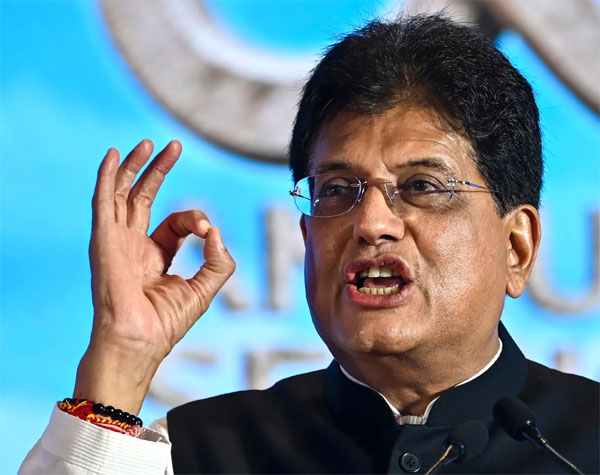
The minister alleged that the Opposition was attempting to “find holes” in the Centre’s economic data without understanding how to make valid comparisons.
“They are trying to misguide the people of India, comparing a growth rate at an old series to the growth rate in the new series, where the base year itself has changed. They are trying to find holes,” he said.
The comments came after the Ministry of Statistics and Programme Implementation (MOSPI) on Wednesday rejected a claim that last year’s current GDP for the first quarter had been revised down from Rs 86 lakh crore to Rs 80 lakh crore to make the current year’s first-quarter GDP growth appear stronger.
MOSPI also rejected the suggestion that, without the alleged revision, growth in current prices would have been only 2.6 per cent.
According to an FAQ issued by the ministry, Q1 GDP for 2026-27 has been estimated using the new GDP series, with 2022-23 as the base year. It therefore cannot be directly compared with the Rs 86 lakh crore figure for Q1 of 2025-26, which was part of the earlier series based on 2011-12 as the base year.
MOSPI said a valid comparison can be made only with the Rs 80 lakh crore figure calculated under the new series, using 2022-23 as the base year.
The ministry said comparisons of Q1 GDP estimates need to be viewed in the context of revisions made to the GDP series.
The change in the Q1 2025-26 estimate does not represent a downward revision intended to make the current year’s growth rate appear higher, MOSPI said. Instead, it reflects successive methodological and data revisions undertaken as part of the GDP series.