Daijiworld Media Network - Jerusalem
Jerusalem, Oct 7: Israel’s October 7, 2023 attack by Hamas has emerged as the central issue in the country’s upcoming elections, with Prime Minister Benjamin Netanyahu and his political opponents placing the security failure at the heart of their campaigns.
Israel is preparing for its first elections since the Hamas attack, which killed around 1,200 people and saw 251 others taken hostage. The attack triggered a prolonged regional conflict and remains a defining issue for Israeli voters.
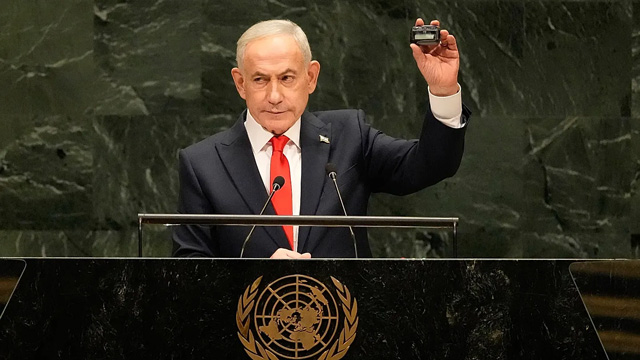
The October 27 election could have major political implications for Netanyahu, who is nearing 77 and has served as Israel’s longest-serving prime minister. A defeat could bring his long political career to an end, while a victory would mark a significant political comeback following the security crisis.
Netanyahu’s opponents have accused his government of failing to prevent the attack and are demanding accountability. They have pledged to establish an official commission of inquiry into the events of October 7 and have called for political and institutional reforms.
Netanyahu, however, has rejected calls for such an inquiry and has sought to shift responsibility towards senior security officials. He has maintained that Israel emerged stronger from the conflict and defended his government’s handling of the war.
His main challenger, former military chief Gadi Eisenkot, has campaigned on a promise of “repair and reconstruction”. Eisenkot, whose son and nephew were killed in fighting in Gaza, has accused Netanyahu of avoiding responsibility for the October 7 failures.
The election campaign has also brought several victims and relatives of those affected by the attack into politics. Candidates from various parties include parents who lost children, former military officers who fought on October 7 and others directly affected by the conflict.
The political divide over the attack remains sharp. Netanyahu’s supporters argue that he guided Israel through one of its darkest periods, while his opponents blame his leadership for the failures that allowed Hamas militants to breach the border and launch the deadly assault.
The war that followed has had a devastating impact across the region. Israel launched a military campaign in Gaza, while the conflict later expanded to involve Hezbollah in Lebanon, targets in Yemen and Iran. Hundreds of Israelis have also been killed in the fighting.
Meanwhile, Israel’s international standing has suffered amid widespread criticism of its military campaign in Gaza. Several governments have accused Israel of genocide, a charge Israel strongly rejects, and the International Criminal Court has issued an arrest warrant for Netanyahu.
Despite the centrality of the October 7 attack in the election campaign, the humanitarian situation in Gaza and the future of the Palestinians have received comparatively little attention in Israel’s political discourse. Most major parties have also shown limited support for the establishment of a Palestinian state.
Opinion polls indicate a close contest between Netanyahu and Eisenkot, with the outcome uncertain. According to the Israel Democracy Institute, more than 60 per cent of Israelis say their views about October 7 are a central factor in deciding how they will vote.
Analysts, however, say the importance voters attach to October 7 does not necessarily translate into support for one particular political camp, reflecting the deep divisions that continue to shape Israeli society.