Daijiworld Media Network - Jerusalem
Jerusalem, Oct 30: Israel's 2026 parliamentary elections have resulted in a hung Knesset, with no political bloc securing the 61 seats required for a majority in the 120-member parliament, according to the final results released by the Central Elections Committee (CEC) on Friday.
Prime Minister Benjamin Netanyahu's Likud-led bloc secured 53 seats, while the opposition alliance led by Gadi Eisenkot's Yashar party won 48 seats. Arab political factions accounted for the remaining 19 seats.
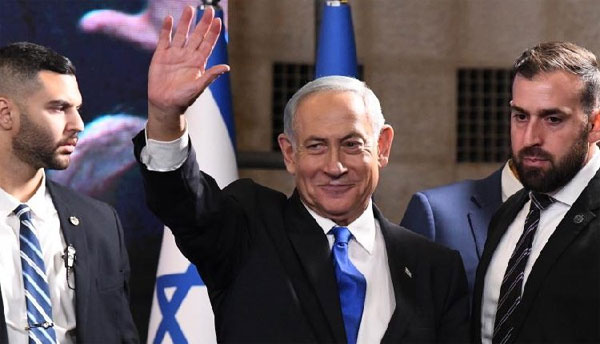
The outcome marks a significant setback for Netanyahu, whose coalition parties held 68 seats in the outgoing Knesset, The Times of Israel reported.
The official results are scheduled to be submitted to Israeli President Isaac Herzog on November 4, following the completion of final checks into reported errors and complaints by the CEC.
Herzog will subsequently hold consultations with leaders of all political parties, who will recommend their preferred candidates to form the next government.
Despite the uncertainty over government formation, the newly elected Knesset is scheduled to be sworn in on November 10.
Reports indicate that negotiations to form the next government could prove challenging and may extend beyond two months, as neither political bloc is close to the 61-seat majority required to govern.
The final voter turnout stood at 77.9 per cent, the highest recorded in several decades.
On Wednesday, President Herzog urged political leaders to make every possible effort to avoid another round of elections. He called on those participating in government formation negotiations to approach the discussions with an open mind.
"We must do everything we can, certainly after yesterday, to avoid another round of elections. So I expect everyone who comes here to come with an open mind," The Times of Israel quoted Herzog as saying.
Both Netanyahu and Eisenkot have maintained that they would lead the next government.
Earlier this week, addressing supporters at the Likud election headquarters in Jerusalem after the polling, Netanyahu asserted that the right wing commanded a "great majority" among Israel's "Zionist public" and called for the formation of a "strong right-wing government".
He also criticised parties willing to cooperate with Arab political factions, describing such an arrangement as a "shame".
The Tuesday elections were the first parliamentary contest since the October 7, 2023, Hamas attack on Israel. The polls were held against the backdrop of significant changes in the country's political landscape and voter priorities since the previous elections in 2022.