According to projections reported by major US news organisations, Democrats have secured at least seven Senate seats previously held by Republicans and flipped more than two dozen Republican-held congressional districts. Several closely watched contests also resulted in victories for Democratic candidates in states that Trump had comfortably won in the 2024 presidential election.
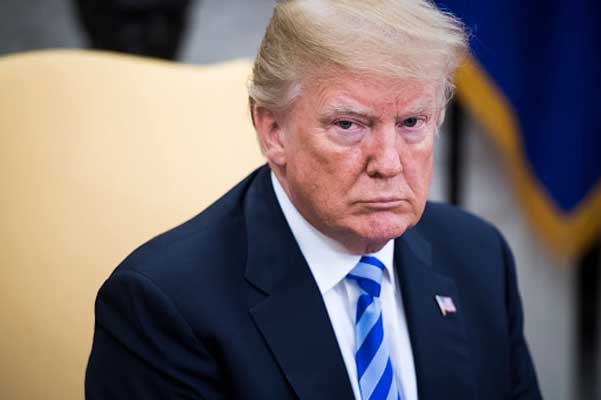
The shift will give Democrats control of both chambers of Congress when the newly elected lawmakers take office in January 2027, significantly strengthening their ability to challenge the president's legislative agenda and scrutinise his administration.
Republicans lose key Senate battles
One of the most striking features of the election was the Democrats' success in traditionally Republican states.
Kansas elected its first Democratic senator in nearly a century, ending a long-standing Republican dominance. In Texas, Democrats secured a Senate seat in a major upset, while also defeating Republican candidates in several other closely watched contests.
Democrats also flipped Republican-held Senate seats in Iowa, Ohio, Maine, North Carolina and South Carolina. They retained key seats in Georgia and Michigan, consolidating their control of the upper chamber.
In Maine, Republican Senator Susan Collins conceded defeat to Democrat Troy Jackson, bringing an end to her long political career in the Senate. In Texas, Democrat James Talarico's victory over Republican Ken Paxton marked a particularly significant breakthrough for the party in a state that has remained a Republican stronghold for decades.
Other notable Democratic victories included former Ohio governor Sherrod Brown defeating Republican Senator Jon Husted and Roy Cooper winning the North Carolina Senate contest.
Democrats cross majority mark in House
The Democratic gains extended to the House of Representatives, where the party crossed the crucial 218-seat threshold required for a majority in the 435-member chamber.
According to the latest results snapshot reported by the Indian Express on Wednesday afternoon, Democrats had secured 228 seats against the Republicans' 139, with 68 constituencies yet to be called. The figures remain subject to further counting and official certification.
The Democrats flipped more than two dozen Republican-held districts, including several constituencies that had supported Trump by substantial margins in the 2024 presidential election.
The victory is also expected to pave the way for Democratic leader Hakeem Jeffries to become the first Black Speaker of the US House of Representatives, subject to his formal election by lawmakers when the new Congress convenes in January.
Trump's policies under voters' scrutiny
Political observers have identified economic discontent as one of the principal factors behind the Republican setback.
The rising cost of living, persistent concerns over inflation, tariffs and the administration's handling of the war with Iran featured prominently in the election campaign.
According to voter surveys conducted by The Associated Press, a large section of the electorate expressed dissatisfaction with the direction of the country. Nearly nine in 10 voters considered the cost of living an important factor in their voting decision, while around seven in 10 wanted Congress to exercise stronger checks and balances over the president.
The AP voter survey also indicated that many voters felt financially worse off than when Trump assumed office in January 2025. Concerns over government corruption and the perception that the administration was not sufficiently addressing ordinary Americans' economic difficulties further contributed to the anti-Republican sentiment.
Trump had personally campaigned extensively for Republican candidates in the run-up to the elections, urging supporters to treat the contests as a vote on his presidency. He had repeatedly asked voters to pretend that he was on the ballot.
However, the results suggested that his personal political influence was insufficient to prevent a significant electoral backlash.
Trump accepts results but rejects personal setback
Reacting to the Democratic victories, Trump congratulated the opposition for its campaign performance but sought to distance himself from the Republican losses.
In an interview with Fox News, he said the Democrats had campaigned well and fought hard. However, he maintained that the outcome should not be interpreted as a personal rejection of his presidency.
"I don't view it as a hit on me," he said, while asserting that his administration had delivered what he described as the greatest two years in the history of the presidency.
Trump also indicated that he would work with Democrats on certain issues, although he warned that he would veto legislation he considered unacceptable.
Historic breakthroughs in gubernatorial and Senate races
The elections also produced several historic milestones across the country.
Democrat Keisha Lance Bottoms won the Georgia gubernatorial election, becoming the first Black woman to be elected governor of a US state. Gina Hinojosa's victory in Texas made her the state's first Latina governor.
In Minnesota, Democrat Peggy Flanagan won a Senate seat, becoming the first Native American woman elected to the US Senate. Michigan's Abdul El-Sayed became the first Muslim senator in the country's history.
Meanwhile, Democrat Aaron Ford won the Nevada gubernatorial election, becoming the state's first Black governor. Other Democratic victories in Ohio and Iowa further strengthened the party's position in state-level politics.
The results also reflected a shift among younger and Hispanic voters, particularly in parts of Texas and other traditionally Republican regions.
What the results mean for Trump
The Democratic takeover of Congress is expected to significantly alter the political equation in Washington during the final two years of Trump's current term.
With control of both chambers, Democrats will have the ability to block or substantially delay the president's legislative proposals, scrutinise government spending, summon administration officials for congressional hearings and initiate investigations into executive decisions.
Control of the Senate will also give Democrats considerable influence over presidential appointments, including judicial nominations and senior government positions.
The new political arrangement is likely to lead to increased confrontation between the White House and Congress, potentially slowing down the administration's legislative priorities.
The results are also expected to influence the political positioning of both parties ahead of the 2028 presidential election, when Trump will be constitutionally ineligible to seek another term.
Although the election does not immediately change the presidency, it has delivered a strong warning to the Republican Party about the electoral consequences of economic dissatisfaction and public discontent with the administration's policies.
For Democrats, the victory marks a remarkable political comeback and provides an opportunity to re-establish themselves as a formidable national force. However, the party will now face the challenge of translating its electoral success into effective governance and delivering on voters' expectations.
The latest figures reflect projections and reported race calls available on November 4, with counting continuing in some constituencies and final certification of results still pending.