Daijiworld Media Network - Mumbai
Mumbai, Nov 11: The Brihanmumbai Municipal Corporation (BMC) is planning to install five additional air quality monitoring stations across Mumbai at an estimated cost of Rs 22 crore, even as questions have been raised over the selection of gardens as locations for the facilities.
The new Continuous Ambient Air Quality Monitoring Stations (CAAQMS) will be set up in civic gardens at Mulund, Dadar, Goregaon, Charni Road and Santacruz. Civic officials said the locations would help monitor the general air quality of surrounding neighbourhoods.
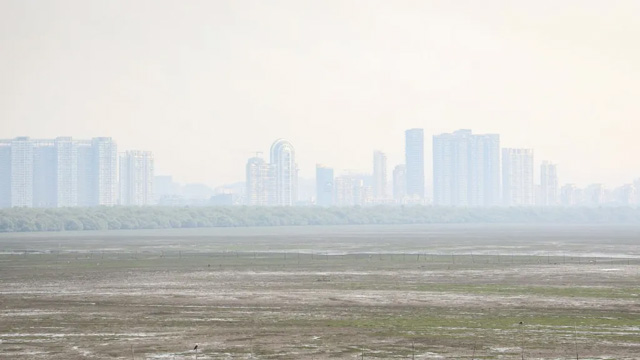
However, atmospheric scientists have expressed concerns that installing all five stations in open green spaces may not provide an accurate picture of pollution levels experienced by residents along busy roads and in densely populated areas.
Mumbai currently has 29 CAAQMS stations monitored by the BMC, Maharashtra Pollution Control Board and Indian Institute of Tropical Meteorology. Their readings are shared on the Central Pollution Control Board's national air quality monitoring dashboard, Sameer.
Dadar, Charni Road and Mulund currently do not have monitoring stations. The nearest facilities are located in Worli, Mazgaon and Bhandup respectively, each around five kilometres away.
A civic official said the order for the new stations had been placed and they were expected to become operational within six months. The Rs 22-crore project also includes operation and maintenance expenses for five years.
Civic officials maintained that selecting gardens and open spaces was in accordance with Central Pollution Control Board guidelines. They said such locations serve as urban background monitoring sites, helping assess general ambient air quality rather than pollution concentrated around specific sources.
However, atmospheric scientist Gufran Beig, chair professor at the National Institute of Advanced Studies, questioned the decision to locate all the monitoring stations in gardens. He said trees and open surroundings could influence local airflow and pollutant dispersion, potentially resulting in readings that understate pollution levels.
Beig said World Meteorological Organization guidelines emphasised the need to install monitoring stations across different types of locations to obtain representative air quality data. He added that factors such as population density, emission sources and major pollution contributors should be considered while selecting sites.
He also called for updating India's National Ambient Air Quality Standards, notified in 2009, to reflect changing urban conditions and pollution patterns.
Beig cautioned that if the CPCB revised its monitoring guidelines in the future, the newly installed stations could become redundant, making relocation difficult due to their large size.