Daijiworld Media Network - New Delhi
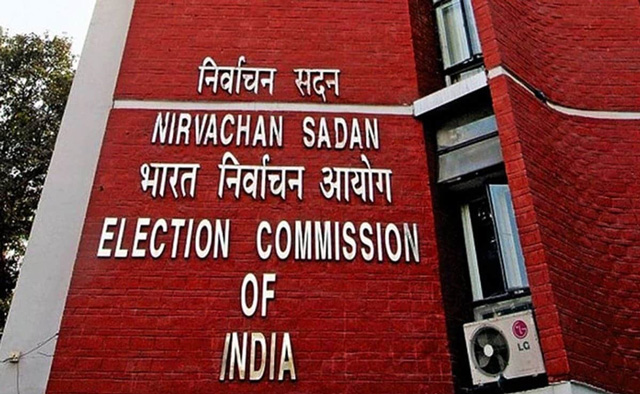
New Delhi, Nov 12: The Election Commission of India (ECI) has dismissed social media allegations of discrepancies between votes polled and votes counted during the 2024 Lok Sabha and Assembly elections, describing the claims as misleading.
In a post on X, the Commission released constituency-wise fact-checks and shared official figures from its Index Cards and Statistical Reports to clarify the allegations. The claims mainly concerned constituencies in Maharashtra, Haryana and Jammu and Kashmir.
According to the ECI, several social media posts had confused the total number of registered electors with the number of votes polled or misinterpreted other official figures, creating a false impression that large numbers of votes had gone uncounted.
One such allegation concerned Mumbai North parliamentary constituency in Maharashtra, where social media posts claimed that 18.11 lakh votes were polled but only 10.33 lakh were counted, leaving 7.78 lakh votes unaccounted for.
The Commission clarified that the constituency had 18,12,115 registered electors, of whom 10,36,496 voted. This included 10,33,268 votes recorded on Electronic Voting Machines (EVMs) and 3,228 postal ballots. After accounting for 765 test votes and votes not retrieved from Control Units as per prescribed guidelines, 10,35,731 votes were counted. The voter turnout stood at 57.20 per cent.
The ECI explained that the difference represented registered electors who did not vote and not uncounted ballots.
Similar allegations concerning Srinagar parliamentary constituency in Jammu and Kashmir were also rejected. Social media posts claimed that 6,66,046 votes were polled while 6,72,942 were counted.
However, official records showed that the constituency had 17,48,803 registered electors and 6,76,408 votes were polled, including 6,72,942 EVM votes and 3,466 postal ballots. After deducting 1,009 test votes and votes not retrieved from Control Units, the total counted votes stood at 6,75,399. The turnout was 38.68 per cent.
In Maharashtra's Beed Assembly constituency, claims suggested that 3.84 lakh votes were polled but only 2.39 lakh were counted. The ECI clarified that the constituency had 3,84,885 registered electors, while 2,42,983 votes were polled and counted, including 2,38,845 EVM votes and 4,138 postal ballots. The voter turnout was 63.13 per cent.
The Commission also dismissed similar claims concerning Dahanu Assembly constituency, where official records showed 3,01,257 registered electors and 2,21,818 votes polled and counted. The turnout stood at 73.63 per cent.
In Haryana's Tosham Assembly constituency, social media posts alleged that 2.21 lakh votes were polled but only 1.60 lakh were counted. The ECI clarified that the constituency had 2,23,609 registered electors, with 1,61,872 votes polled and 1,61,020 counted after adjustments for test votes. The turnout was 72.39 per cent.
Another claim concerning Kaithal Assembly constituency suggested that only 215 citizens had voted, while the Commission counted 1,67,285 votes. The ECI clarified that 215 referred to the number of polling stations and not voters. Official records showed 2,23,449 registered electors and 1,68,851 votes polled and counted, with turnout at 75.57 per cent.
The Commission also rejected allegations of excess vote counting in the Chenani, Kokernag and Pulwama Assembly constituencies in Jammu and Kashmir. According to official figures, Chenani recorded 85,189 votes polled and counted, while Kokernag recorded 57,542. In Pulwama, 51,011 votes were polled, of which 50,529 were counted after standard deductions.
The ECI said the figures cited in the allegations were either the total number of registered electors or administrative details such as the number of polling stations. It maintained that the actual votes polled and counted matched after accounting for postal ballots, test votes and votes not retrieved from Control Units.
The Commission further reiterated that Form 17C is the statutory record of votes cast at each polling station. Part-I of the form is shared with polling agents at the close of polling, while the figures are matched with Part-II on counting day in the presence of candidates' agents.
The ECI said all relevant information remains publicly accessible through its website under Statistical Reports and Index Cards, adding that the official records do not support the allegations of large-scale discrepancies in the 2024 elections.