Daijiworld Media Network – New Delhi
New Delhi, Nov 23: A new clinical trial has reported encouraging results in the treatment of advanced pancreatic cancer, with a combination of an experimental drug and chemotherapy shrinking tumours in some patients and preventing disease progression in around 90 per cent of participants.
The findings emerged from a Phase I/II clinical trial presented on November 20 at the 38th International Symposium on Molecular Targets and Cancer Therapeutics in Barcelona, Spain. The event was jointly organised by the European Organisation for Research and Treatment of Cancer, the US National Cancer Institute and the American Association for Cancer Research.
The trial evaluated daraxonrasib, a once-daily oral medication, in combination with two chemotherapy drugs, gemcitabine and nab-paclitaxel. It involved 61 patients whose pancreatic cancer had spread to other organs and who had not previously received treatment for metastatic disease.
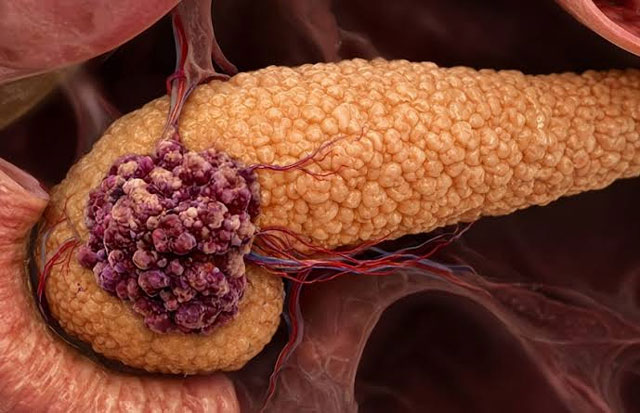
The results showed that 90.2 per cent of participants experienced disease control, meaning their tumours either shrank, disappeared or stopped growing. Tumours shrank or disappeared in 60.7 per cent of patients, while five participants, or 8.2 per cent, achieved complete responses, with no detectable tumours on imaging scans.
By comparison, conventional chemotherapy alone typically produces tumour shrinkage in around 23 to 42 per cent of patients, with the disease often progressing again within five to six months.
The findings follow another significant development involving daraxonrasib. On August 26, the US Food and Drug Administration approved the drug for adults with metastatic pancreatic cancer who had received at least one previous systemic treatment or were not candidates for combination chemotherapy.
That approval followed a separate Phase III trial involving 500 patients. It reported a median overall survival of 13.2 months among patients receiving daraxonrasib, compared with 6.7 months among those receiving standard chemotherapy.
However, the latest study examined a different treatment setting, assessing the use of daraxonrasib alongside chemotherapy as an initial treatment for metastatic pancreatic cancer.
Dr Wungki Park, a gastrointestinal medical oncologist at Memorial Sloan Kettering Cancer Center in New York, who presented the findings, described the results as potentially transformative.
He said the encouraging outcomes included not only a higher proportion of patients responding to treatment but also deeper responses and a near doubling of the duration of disease control, which could eventually translate into longer survival.
Pancreatic cancer remains one of the deadliest cancers worldwide. According to the International Agency for Research on Cancer's GLOBOCAN 2022 estimates, approximately 5.1 lakh new cases and 4.67 lakh deaths were reported globally.
Daraxonrasib works by targeting RAS (Rat Sarcoma) proteins, which act as molecular switches inside cells and regulate their growth, division and survival. Under normal conditions, these proteins switch on and off in response to signals, helping maintain controlled cell activity.
However, mutations in RAS genes can leave these switches permanently active, sending continuous signals that encourage cells to multiply uncontrollably and potentially develop into cancer.
More than 90 per cent of pancreatic cancers carry mutations in RAS genes, making them a major driver of the disease. KRAS, a member of the RAS protein family, is particularly frequently mutated in pancreatic cancer.
Daraxonrasib belongs to a class of medicines known as RAS inhibitors. It binds to mutant RAS proteins and blocks the signals that promote cancer cell growth and survival. Targeting RAS has been a major challenge in cancer research for decades because these proteins lack easily accessible binding sites for conventional drugs.
Despite the promising findings, researchers have cautioned that the latest trial involved only 61 patients and did not directly compare the drug combination with chemotherapy alone. Therefore, it cannot establish whether adding daraxonrasib improves overall survival.
A global Phase III trial, known as RASolute-303, is currently evaluating daraxonrasib both as a standalone treatment and in combination with gemcitabine and nab-paclitaxel, comparing the approaches against chemotherapy alone.
Researchers will also require longer follow-up to determine whether patients whose tumours became undetectable on scans remain in remission. The disappearance of visible tumours does not necessarily mean that the cancer has been completely eliminated.